
You wake up after seven hours of sleep, and you’re still tired.
Not the pleasant, slow kind of tired that dissolves with a good cup of coffee. The deep, unshakeable kind. The kind where you drag yourself through the morning, hit a wall by midday, push through on willpower and caffeine until dinner, and then collapse in the evening — only to do it all again tomorrow.
You’ve tried everything that’s supposed to help. Earlier bedtimes. Cutting out alcohol. Exercising more. Eating “clean.” And yet the tiredness remains — like a dimmer switch that got stuck somewhere between off and barely on.
What if the problem isn’t your schedule, your sleep hygiene, or your habits? What if it’s happening at a level far more fundamental than any of those things — inside the trillions of cells that make up your body?
That’s what this article is about. Not energy in the abstract sense. Cellular energy — the kind that your body actually runs on, is manufactured inside microscopic structures called mitochondria. When mitochondria work well, you feel it: clear-headed, resilient, genuinely alive. When they don’t, no amount of sleep, caffeine, or supplements can fully compensate.
Here’s what’s really going on — and more importantly, what you can do about it.
What Are Mitochondria, and Why Does Everyone Keep Talking About Them?
You probably remember mitochondria from biology class as “the powerhouse of the cell.” That description is technically accurate and almost entirely useless — because it doesn’t come close to capturing how critical these structures actually are to how you feel every single day.
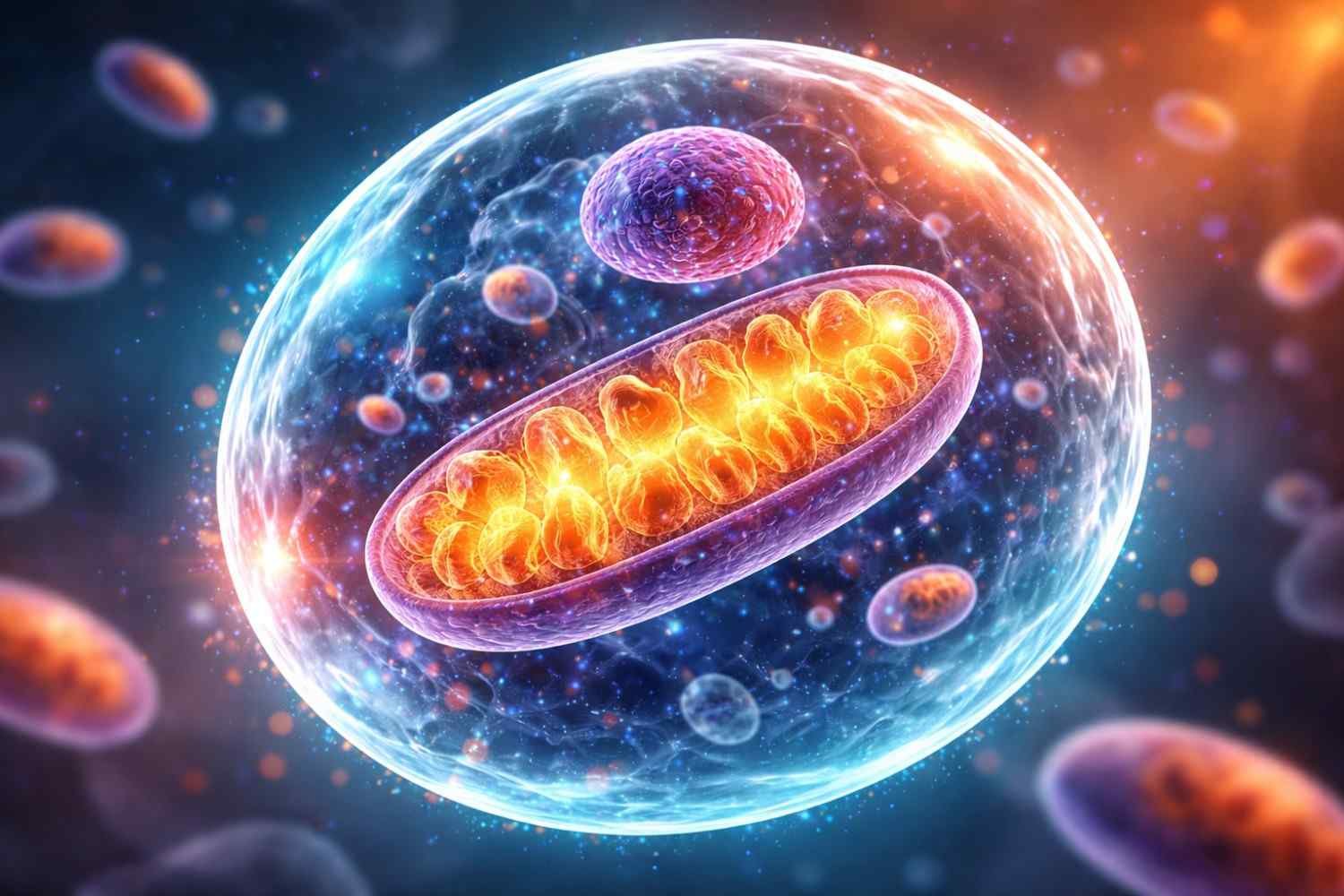
Mitochondria are tiny organelles that exist in nearly every cell of your body. Cells with high energy demands — heart muscle cells, liver cells, brain neurons, skeletal muscle fibres — can contain anywhere from 1,000 to 2,000 mitochondria each. Cells with lower energy needs have fewer. Together, your body contains somewhere in the order of quadrillions of mitochondria.
Their primary job is to take the food you eat — broken down into glucose and fatty acids — and convert it into a molecule called ATP (adenosine triphosphate). ATP is the actual currency of cellular energy. It powers every muscular contraction, every nerve signal, every hormonal reaction, every immune response, every thought you have. Without ATP, nothing works.
Here’s what this means in practice: your mitochondria aren’t just responsible for whether you feel “energetic” in a vague, motivational sense. They are the literal engine behind every physical and mental function your body performs. When your mitochondrial health is compromised — when they’re inefficient, damaged, or declining in number — your entire system suffers. Your brain slows down. Your muscles fatigue faster. Your hormones fall out of balance. Your immune system becomes reactive. Your mood destabilises. Your sleep deteriorates.
And the compounding cruelty of mitochondrial dysfunction is that it tends to be invisible on standard blood tests. Your thyroid panel looks fine. Your iron is normal. Your B12 is adequate. Yet you’re exhausted in a way that nothing explains — because nobody checked the engines.
How Mitochondria Get Damaged in the First Place
This is the part that tends to be most revelatory — because the things that damage mitochondria aren’t exotic or unusual. They’re the defining features of modern life.
Chronic oxidative stress is the primary culprit. Mitochondria generate ATP through a process called cellular respiration, which produces reactive oxygen species — free radicals — as a natural byproduct. In a healthy system, your body’s antioxidant defences neutralise these free radicals efficiently. But when the load of oxidative stress exceeds the body’s capacity to manage it — from poor diet, environmental toxins, chronic psychological stress, excessive exercise without recovery, or persistent inflammation — free radicals accumulate and damage the very mitochondria that produced them. It’s a self-perpetuating cycle: damaged mitochondria produce more free radicals, which damage more mitochondria.
Chronic inflammation compounds this further. Inflammatory cytokines — chemical messengers released during periods of systemic inflammation — directly impair mitochondrial function. This is why people with inflammatory conditions (from chronic gut issues to autoimmune disorders to metabolic syndrome) so frequently report profound, treatment-resistant fatigue. The inflammation isn’t just affecting their joints or their gut. It’s impairing their cellular energy production.
Sedentary behaviour is a particularly insidious driver of mitochondrial decline. Mitochondria are remarkably adaptive — they grow in number, size, and efficiency in response to the demand placed on them. When that demand is consistently absent, they atrophy. The technical term for the process of creating new mitochondria is mitochondrial biogenesis, and it is directly stimulated by physical movement. Sit for most of the day, every day, and your mitochondria slowly decline in both quantity and function — which makes movement feel harder, which makes you move less, which accelerates the decline.
Blood sugar dysregulation damages mitochondria through a process called glycation, where excess glucose attaches to proteins and lipids, impairing their function. Chronically elevated blood sugar, repeated glucose spikes, and insulin resistance all create conditions that are toxic to mitochondrial membranes and function. This is one of the reasons why people with type 2 diabetes or metabolic syndrome report such pervasive fatigue — their cellular energy machinery is being progressively compromised by the metabolic environment their diet and lifestyle has created.
Sleep deprivation significantly impairs the body’s ability to repair mitochondrial damage. Deep sleep is when your cells conduct the majority of their maintenance and restoration work — including clearance of damaged mitochondria through a process called mitophagy. Consistently poor sleep means consistently inadequate cellular repair, and mitochondrial function declines cumulatively.
Nutrient deficiencies — particularly in the specific micronutrients that mitochondria depend on to function — are perhaps the most overlooked factor of all. Mitochondria require a highly specific set of cofactors to run the biochemical processes that produce ATP. When those cofactors are missing or insufficient, energy production falters even if the mitochondria themselves are structurally intact.
Understanding these root causes matters because it tells you exactly where to intervene. Lasting energy doesn’t come from stimulating your adrenal glands with caffeine or forcing your nervous system into alertness with willpower. It comes from removing the things that are damaging your mitochondria and providing the conditions they need to regenerate and thrive.
The Nutrients Your Mitochondria Can’t Function Without
One of the most actionable insights in mitochondrial science is this: cellular energy production is profoundly nutrient-dependent. The Krebs cycle and the electron transport chain — the two primary biochemical processes through which mitochondria produce ATP — require specific vitamins, minerals, and compounds at every step. When these are depleted, the entire production line slows down.
CoQ10 (Coenzyme Q10) is perhaps the best-known mitochondrial nutrient, and for good reason. CoQ10 is an essential component of the electron transport chain — the final stage of ATP production. It also functions as a fat-soluble antioxidant, protecting mitochondrial membranes from oxidative damage. Your body synthesises CoQ10 naturally, but production declines significantly after the age of 30 — and is further suppressed by statin medications, which block the same biochemical pathway used to produce both cholesterol and CoQ10. Dietary sources include organ meats, oily fish, beef, spinach, broccoli, and cauliflower.
B vitamins are arguably the most critical nutritional family for mitochondrial function — yet B vitamin deficiencies are among the most common in the modern diet. Virtually every step of cellular respiration requires one or more B vitamins as a cofactor:
- B1 (thiamine) is essential for converting pyruvate (from glucose) into a form mitochondria can use. Deficiency directly impairs energy metabolism, producing fatigue, cognitive fog, and nerve dysfunction.
- B2 (riboflavin) is a direct component of the electron transport chain. Without adequate B2, ATP production stalls.
- B3 (niacin / NAD+) deserves particular attention. NAD+ (nicotinamide adenine dinucleotide) is one of the most researched molecules in longevity and mitochondrial science. NAD+ acts as an electron carrier in the Krebs cycle — it shuttles electrons through the mitochondrial machinery that produces ATP. NAD+ levels decline significantly with age, metabolic stress, and chronic inflammation, and this decline is now considered one of the central mechanisms of age-related fatigue and metabolic decline. Dietary sources of B3 include turkey, chicken, salmon, tuna, peanuts, and mushrooms.
- B5 (pantothenic acid) is required to form acetyl-CoA, the entry point into the Krebs cycle. Without it, even adequate carbohydrates and fats cannot be properly converted to energy.
- B6, B9 (folate), and B12 support the methylation cycle, which is essential for mitochondrial maintenance and DNA repair.
Magnesium is a co-factor in over 300 enzymatic reactions in the body — including ATP synthesis itself. ATP must be bound to magnesium to be biologically active. Without adequate magnesium, your cells cannot use the ATP they produce. Research estimates that over 50% of the Western population is deficient in magnesium, making it one of the most widespread and underappreciated contributors to chronic fatigue. Rich dietary sources include dark leafy greens, pumpkin seeds, almonds, black beans, dark chocolate, and avocado.
Iron is a structural component of the proteins in the electron transport chain. Iron deficiency anaemia impairs mitochondrial function directly, but sub-clinical iron depletion — where haemoglobin is technically normal but iron stores are low — also significantly reduces cellular energy production in ways that standard testing often misses.
Alpha-lipoic acid is a compound synthesised by the mitochondria themselves that functions as both a cofactor in energy metabolism and a powerful antioxidant capable of regenerating other antioxidants, including vitamins C and E and glutathione. It is unique among antioxidants in being both fat and water soluble — meaning it can protect mitochondrial membranes (which are lipid-based) and the aqueous interior of cells simultaneously.
L-carnitine is an amino acid compound that performs a specific and essential function: transporting long-chain fatty acids across the mitochondrial membrane so they can be burned for fuel. Without adequate L-carnitine, your mitochondria cannot efficiently use fat as an energy source — a significant limitation when fat is your primary fuel source (as it is during extended fasting, low-carbohydrate eating, or endurance exercise).
Omega-3 fatty acids (specifically EPA and DHA from oily fish) directly influence the composition and fluidity of mitochondrial membranes. Mitochondrial membranes must remain fluid and responsive to function efficiently — and their composition is directly shaped by the fats you eat. Diets high in omega-3s are associated with better mitochondrial membrane integrity, improved energy efficiency, and reduced mitochondrial oxidative stress. Diets dominated by omega-6 fatty acids from processed seed oils have the opposite effect.
The picture that emerges is striking: mitochondrial health is not a single intervention. It is a nutritional ecosystem. Your cellular energy machinery requires a complex, coordinated array of nutrients — and in the modern diet of ultra-processed food, refined carbohydrates, and minimal organ meats, many of these nutrients are systematically absent.
The Lifestyle Levers That Rebuild Mitochondria From the Ground Up
Nutrition provides the raw materials. Lifestyle provides the signals that tell your mitochondria what to do with them.
Movement: The Most Powerful Mitochondrial Stimulus
Exercise is the most potent inducer of mitochondrial biogenesis known to science. When you exercise — particularly aerobic exercise that elevates your heart rate — your muscles’ demand for ATP spikes dramatically. Mitochondria work at maximum capacity. This stimulates the activation of a protein called PGC-1α (peroxisome proliferator-activated receptor gamma coactivator 1-alpha), which functions as the master regulator of mitochondrial biogenesis. PGC-1α essentially tells your cells: we need more power. Build more mitochondria.
The result, over weeks and months of regular exercise, is a measurable increase in mitochondrial density, size, and efficiency. This is the primary mechanism behind why fit people have more energy — not just because their cardiovascular system is stronger, but because their cells have more and better mitochondria.
Both aerobic exercise (running, cycling, swimming, brisk walking) and high-intensity interval training (HIIT) stimulate mitochondrial biogenesis through slightly different pathways, and research suggests that alternating between the two produces superior results to either alone. Resistance training also contributes by maintaining mitochondria-dense muscle mass.
Even modest amounts of movement matter. Research published in the journal Cell Metabolism found that a single session of moderate aerobic exercise produced measurable changes in mitochondrial gene expression within hours, long before fitness improvements are visible. Your mitochondria respond to movement faster than your mirror does.
Fasting and Time-Restricted Eating: Cellular Housekeeping
When your body is in a fed state — continuously processing incoming food — mitochondria are primarily occupied with energy production. During periods of fasting, however, a critical maintenance process activates: mitophagy — the selective removal and recycling of damaged, dysfunctional mitochondria.
Mitophagy is essentially your cells’ quality control system. Damaged mitochondria that produce excess free radicals and impair cellular function are identified, dismantled, and their components recycled to build new, healthy mitochondria. It is one of the primary mechanisms through which fasting produces such potent anti-aging and energy-enhancing effects.
Research consistently shows that time-restricted eating — confining food intake to a 10 to 12 hour window and fasting for the remaining 12 to 14 hours — activates mitophagy, improves mitochondrial efficiency, reduces oxidative stress, and enhances cellular energy production. Longer fasting periods (24 hours or more) produce even more dramatic mitochondrial renewal effects, though these require careful management and aren’t appropriate for everyone.
The practical implication is simple: closing your eating window 3 hours before sleep and not eating for the first hour or two of your morning (once your body has adjusted) creates conditions that allow your cellular housekeeping to catch up. This is not starvation — it’s biology functioning exactly as designed.
Cold Exposure: Mitochondrial Activation Through Thermogenesis
Cold exposure — cold showers, cold plunges, or simply spending time in cold environments — activates a specific type of metabolic tissue called brown adipose tissue (brown fat). Unlike white fat (which stores energy), brown fat burns energy to generate heat. It does this through a process called non-shivering thermogenesis, and it is exceptionally mitochondria-dense — brown fat cells contain so many mitochondria that they appear brown under a microscope.
Cold exposure stimulates PGC-1α (the same mitochondrial biogenesis regulator activated by exercise), increases mitochondrial density in brown fat, and promotes the conversion of white fat cells to a more mitochondria-rich form. Regular cold exposure has been shown to increase metabolic rate, improve insulin sensitivity, and enhance cellular energy production.
You don’t need an ice bath. Two to three minutes of cold at the end of your shower — consistent, daily, over weeks — produces measurable physiological adaptation. It’s one of the lowest-cost, highest-leverage interventions for mitochondrial health available.
Light: The Overlooked Mitochondrial Signal
This is one of the most underappreciated aspects of mitochondrial biology: mitochondria respond to light.
Specifically, mitochondria contain photoreceptors that respond to red and near-infrared light. Exposure to these wavelengths — present in natural sunlight, particularly in the morning and late afternoon — directly stimulates cytochrome c oxidase, a key enzyme in the electron transport chain. This increases ATP production efficiency and reduces oxidative stress within mitochondria.
This is why morning sunlight exposure — getting outside within the first hour of waking, without sunglasses, for 10 to 20 minutes — produces such a pronounced effect on energy levels beyond the well-documented circadian rhythm benefits. You’re not just setting your body clock. You’re directly stimulating your mitochondria.
Conversely, excessive exposure to blue light from screens in the evening inhibits this beneficial mitochondrial signalling while also suppressing melatonin — a double hit to cellular recovery and energy restoration.
Stress Management: Protecting Your Mitochondria From Cortisol
Chronic psychological stress is one of the most damaging forces in mitochondrial biology. When cortisol remains chronically elevated, it generates mitochondrial oxidative stress, suppresses mitophagy, reduces ATP production efficiency, and over time, leads to measurable mitochondrial DNA damage.
This is not metaphorical. A landmark 2018 study found that people with higher perceived stress had measurably shorter mitochondrial DNA telomeres — a direct biomarker of mitochondrial aging. Stress accelerates cellular ageing at the level of your mitochondria.
Practices that demonstrably reduce cortisol and protect mitochondrial health include yoga, meditation, time in nature, social connection, creative pursuits, and the physiological sigh breathwork technique — a double inhale through the nose followed by a long exhale through the mouth, repeated for five minutes. This specific breathing pattern activates the parasympathetic nervous system and reduces cortisol acutely. Over time, consistent nervous system regulation appears to have measurable protective effects on mitochondrial function.
Reading Your Own Mitochondrial Health: The Signals Your Body Is Already Sending
Your body is communicating the state of your mitochondrial health constantly. Once you know what to look for, the signals become unmistakable.
Morning fatigue despite adequate sleep is one of the clearest indicators. If you wake up after 7 to 9 hours of sleep and feel genuinely unrestored — heavy, foggy, reluctant to move — this is your mitochondria communicating that cellular restoration was inadequate overnight.
Post-exercise exhaustion that lasts for days rather than the normal 24 to 48 hours is a significant warning sign. Healthy mitochondria recover from exercise efficiently. When recovery is disproportionately slow, mitochondrial function may be impaired.
Cognitive fatigue — difficulty concentrating, mental fog, a sense that thinking is effortful — is often mitochondrial in origin. Your brain is the most mitochondria-dense organ in the body relative to its size, and it is exquisitely sensitive to cellular energy deficits. When your brain is foggy, your mitochondria are often struggling.
The afternoon crash — genuine energy collapse between 2 and 4 PM that goes beyond blood sugar variability — often signals mitochondrial fatigue, particularly when it’s present even on days when blood sugar is stable and meals are well-structured.
Temperature dysregulation — feeling cold when others are comfortable, or running persistently cool — can indicate reduced mitochondrial thermogenesis. Mitochondria generate heat as a byproduct of energy production; when they’re underperforming, this heat production declines.
Craving sugar and caffeine constantly — not just occasionally, but as a persistent background drive — often reflects cells attempting to compensate for inadequate ATP production by seeking quick glucose hits. When your mitochondria can’t produce energy efficiently from fat and balanced nutrition, your body becomes dependent on rapid glucose for fuel.
These patterns aren’t inevitable. They’re your biology asking for specific things.
The Mitochondrial Recovery Plan: What to Do This Week
The research on mitochondrial health converges on a consistent set of interventions that are accessible, practical, and produce measurable results within weeks. You don’t need to implement everything at once. You need to start somewhere, build momentum, and let the biology do the compounding.
This week, focus on three things:
1. Add one mitochondrial nutrient daily. Start with magnesium-rich foods at dinner — a handful of pumpkin seeds over your salad, some spinach sautéed in olive oil, a square of dark chocolate (70%+). Or start with oily fish twice this week — salmon, sardines, mackerel — to begin improving your mitochondrial membrane composition. These are not supplements (though targeted supplementation has its place — magnesium glycinate and CoQ10 are the most evidence-backed starting points). These are foods your mitochondria have been waiting for.
2. Move for 20 to 30 minutes every day — any way that raises your heart rate. It doesn’t have to be intense. A brisk walk, a bike ride, a gentle jog, a yoga session that gets your heart working. Consistency matters more than intensity. Every session of aerobic movement signals your cells to build more mitochondria. This signal compounds over weeks.
3. Create a consistent fasting window of 12 hours overnight. If you eat dinner at 7 PM, don’t eat again until 7 AM. This is the minimum threshold for mitophagy activation — your cells are cleaning out their damaged mitochondria and beginning to rebuild. It will likely feel unremarkable at first. The results accumulate beneath the surface.
In week two, add:
Get outside within the first hour of waking for 10 minutes without sunglasses. Allow the morning light — even on overcast days, which still provides 10 to 50 times more light than indoor lighting — to reach your eyes and your skin. Feel what happens to your energy within 3 to 5 days of consistent morning light exposure.
End your shower with 90 seconds of cold water. Not dramatic, not punishing — just consistent. The mitochondrial adaptation response to cold is dose-dependent: a little, regularly produces real results.
In week three, examine your stress load. Where is chronic cortisol coming from in your life? Unrelenting work pressure? Inadequate recovery between demands? A nervous system that rarely gets to rest? Five minutes of breathwork in the afternoon — the physiological sigh — is not a luxury. It is mitochondrial medicine.
The Myths That Keep People Stuck
“I just need more sleep.” Sleep is essential, but inadequate mitochondrial health impairs the quality of sleep, and impaired sleep further damages mitochondria. If you’re sleeping 8 hours and waking exhausted, the problem isn’t the quantity of sleep. It’s what’s happening at the cellular level during that sleep.
“I’m just getting older — this is what tired feels like now.” Age-related mitochondrial decline is real, but it is not inevitable at the pace most people experience it. The research on mitochondrial biogenesis shows unambiguously that the right inputs can regenerate mitochondrial function at any age. Fatigue is not an inherent feature of ageing — it is largely a feature of accumulated mitochondrial damage that hasn’t been addressed.
“I take a multivitamin, so I’m covered.” Multivitamins typically contain insufficient amounts of the specific mitochondrial cofactors that matter most, in forms that are often poorly absorbed. Magnesium oxide (the most common form in supplements) is largely excreted rather than absorbed. Cyanocobalamin (the most common form of B12) requires a conversion that many people can’t perform efficiently. Food-first nutrition provides these nutrients in more bioavailable, synergistic forms.
“I exercise — my mitochondria should be fine.” Exercise is the most powerful single lever for mitochondrial health, but it cannot compensate for chronic sleep deprivation, nutritional deficiencies, unmanaged oxidative stress, or constant psychological stress. Mitochondrial health is a system. All of the variables interact.
“This sounds too complex — there must be a simpler fix.” The biology is complex. The interventions, however, are simple. Eat whole foods rich in mitochondrial nutrients. Move daily. Sleep consistently. Fast overnight. Get morning light. Manage stress. These are not new or surprising recommendations — but understanding why they work, at the level of your cells, transforms them from vague lifestyle advice into targeted biological interventions.
How Medhya AI Supports Your Mitochondrial Health
Here’s the challenge: mitochondrial health isn’t a single metric you can check once and forget. It’s a dynamic, constantly shifting system that’s influenced by what you ate yesterday, how you slept last night, what your stress levels have been this week, where you are in your hormonal cycle, and dozens of other factors that change daily.
Generic advice — “eat more vegetables, exercise regularly, sleep well” — is accurate but insufficient. What you need is an understanding of your specific mitochondrial vulnerabilities and a plan that addresses them in the right order.
This is exactly what Medhya AI was built to do.
Your Medhya Health Score gives you a personalised snapshot of where your metabolic and mitochondrial health currently stands — based on your energy patterns, sleep data, nutrition habits, and stress load. It identifies which variables are most worth addressing first for your specific situation, rather than giving you a generic intervention list that may or may not be relevant to your root cause.
Personalised meal planning for mitochondrial nutrition. Medhya builds meal plans calibrated to your specific nutrient gaps, food preferences, and metabolic patterns — including targeted attention to the foods richest in CoQ10, B vitamins, magnesium, omega-3s, and alpha-lipoic acid. Not a generic “eat clean” plan, but a precision nutrition approach to cellular energy support.
Energy tracking that reveals your mitochondrial patterns. Log your energy, mood, focus, and sleep in Medhya. Over time the app identifies patterns your mitochondria create—the times of day when energy reliably dips, the foods that seem to impair or support your clarity, and the mornings when you wake restored versus depleted. This data becomes the map of your cellular energy landscape.
Guided breathwork and nervous system practices. The cortisol-mitochondria connection is real and significant. Medhya’s guided breathwork practices — including the physiological sigh and targeted afternoon reset — are designed to acutely lower cortisol and reduce chronic oxidative stress that damages mitochondria over time.
Sleep optimisation support. Since deep sleep is when mitochondrial repair occurs, improving your sleep architecture directly improves mitochondrial recovery. Medhya tracks your sleep patterns, identifies disruptions, and provides targeted guidance — from circadian rhythm support to pre-sleep nutrition — to improve your overnight cellular restoration.
Workout guidance calibrated to mitochondrial biogenesis. Not just “exercise more” — but the right combination of aerobic and high-intensity work, at the right frequency and intensity for your current fitness level, to maximise the mitochondrial biogenesis signal without creating the oxidative stress that damages them.
Your mitochondria aren’t broken. They’re waiting for the right inputs. Medhya helps you find them.
The Bigger Picture
There is something quietly profound about understanding that the fatigue you feel isn’t weakness, isn’t laziness, isn’t a character flaw — it’s a biological signal from the engines of your cells.
Mitochondria are ancient. They were once free-living bacteria, billions of years ago, before they were incorporated into the cells of early organisms in a symbiotic relationship that eventually produced every complex life form on Earth, including you. They still communicate with your cells in a language of their own. And one of the things they communicate most clearly, when they’re struggling, is fatigue.
That fatigue is not your identity. It is information.
The science of mitochondrial health is converging on something simple: your cells want to produce energy. They are extraordinarily good at it under the right conditions. The right nutrients. The right movement. The right light. The right rest. The right stress load. When those conditions are consistently present, the energy that results is not the caffeinated, borrowed, crash-prone kind. It is the deep, clean, reliable energy of a body running as it was designed to run.
That energy is available to you. It’s not reserved for the young or the genetically gifted. It’s the natural output of healthy mitochondria — and healthy mitochondria can be rebuilt, at any age, with the inputs they need.
Your cellular powerhouses are waiting. Give them what they need.
Ready to Understand Your Energy at the Root?
Get your personalised Medhya Health Score — and discover what your mitochondria have been trying to tell you.
Medhya AI tracks your energy patterns, identifies your specific cellular vulnerabilities, and builds a plan around your metabolism, your nutrition, your sleep, and your nervous system. Not a generic wellness plan. A precision approach to your biology.
Download Medhya AI today. Your lasting energy starts at the cellular level.
Medhya AI provides personalised meal plans, metabolic health tracking, energy optimisation, guided breathwork, and holistic health support across energy, weight loss, blood sugar balance, gut health, sleep, and nervous system regulation.
Leave a Reply