
You’ve probably noticed it before, even if you couldn’t explain it.
Some weeks, eating well feels effortless. You’re not fighting cravings. You don’t need willpower. You wake up energized, your workouts feel good, your clothes fit a little better, and losing weight seems almost… natural.
Other weeks, everything is a battle. You eat the exact same foods and feel bloated. You push through the same workout and feel depleted. The scale creeps up despite doing nothing differently. You feel hungrier, moodier, and less motivated to even try.
You’re not imagining this. And it has nothing to do with willpower, consistency, or how disciplined you are.
It has everything to do with where you are in your menstrual cycle.
Specifically, it has everything to do with whether you’re in your follicular phase or not.
Most women are trying to lose weight the same way, every day, every week, regardless of the hormonal environment their body is operating in. They follow a fixed meal plan. They stick to the same exercise routine. They track the same macros Monday through Sunday.
And then they wonder why results are inconsistent, frustrating, and hard to sustain.
Here’s the truth: your metabolism isn’t the same every day. Your insulin sensitivity shifts. Your cortisol reactivity changes. Your body’s ability to build muscle, burn fat, and recover from exercise fluctuates — not randomly, but in a highly predictable, hormonally-driven pattern throughout your cycle.
The follicular phase is the single most metabolically favorable window in your entire month for weight loss. If you’re not leveraging it deliberately, you’re leaving your easiest results on the table.
This is what nobody in the conventional diet space is telling you. And it’s why so many women feel like they’re working hard but getting nowhere.
Let’s change that.
What Is the Follicular Phase (And Why It’s Different From Everything Else)
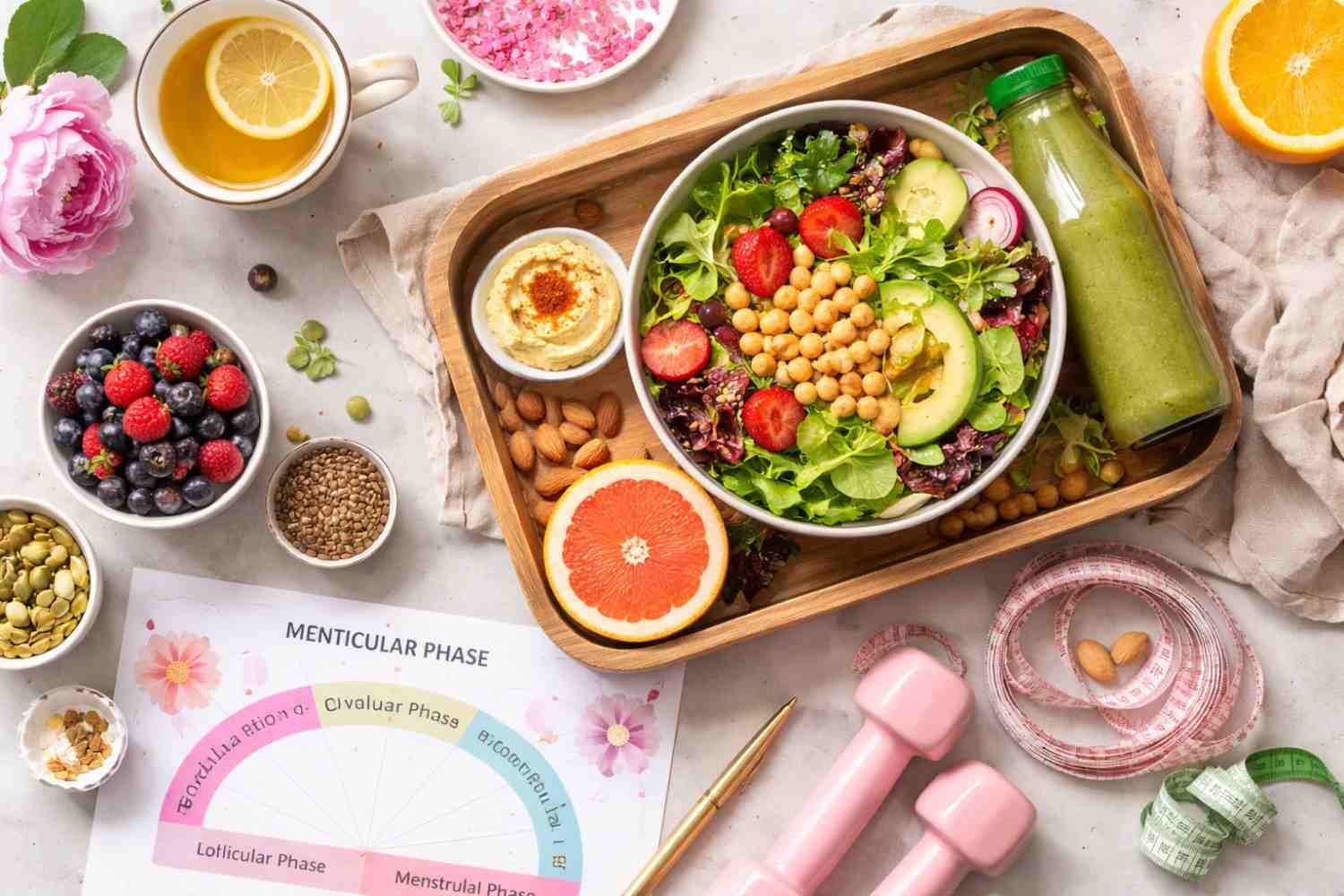
Your menstrual cycle is divided into four distinct phases, each governed by a different hormonal environment:
Menstruation (Days 1–5): Estrogen and progesterone are both low. Your body is shedding the uterine lining. Energy can be low, inflammation may be higher, and your body is in a kind of reset mode.
Follicular Phase (Days 1–13, with the most potent window around Days 6–13): Estrogen begins rising steadily as follicles in the ovaries develop. This is the phase that runs from the end of menstruation through to ovulation. Progesterone remains low.
Ovulation (Around Day 14): A brief surge of luteinizing hormone (LH) triggers the release of an egg. Estrogen peaks, testosterone briefly spikes, and your energy and confidence typically reach their monthly high.
Luteal Phase (Days 15–28): After ovulation, the empty follicle becomes the corpus luteum and begins producing progesterone. Estrogen rises slightly, then both estrogen and progesterone drop sharply in the days before menstruation begins again.
The follicular phase — particularly Days 6 through 13 — is the hormonal window where almost everything about your metabolism works in your favor.
Here’s why.
The Hormonal Architecture of the Follicular Phase
Rising Estrogen: The Metabolic Supercharger
As the follicular phase progresses, estrogen climbs steadily. And estrogen isn’t just a reproductive hormone — it’s a powerful metabolic regulator.
Research on estrogen and metabolic function confirms that estrogen enhances insulin sensitivity in muscle, liver, and fat tissue, improves mitochondrial efficiency, supports serotonin production, and promotes the use of fat as a primary fuel source during exercise.
What this means practically:
When estrogen is rising, your cells are more receptive to insulin’s signals. Glucose gets shuttled into muscle tissue efficiently, blood sugar stays stable, and insulin levels remain lower — which means your body can access stored fat for fuel more readily.
You don’t spike insulin as easily. You recover from meals faster. You feel less driven to snack between meals. Your energy is steadier.
Compare this to the luteal phase, when progesterone counteracts estrogen’s insulin-sensitizing effects, insulin resistance increases by 20–30%, and your body becomes progressively more prone to storing fat, craving carbohydrates, and spiking blood sugar from foods that didn’t bother you two weeks earlier.
The difference isn’t subtle. It’s the difference between a body that flows easily into fat-burning mode and one that’s hormonally locked into storage mode.
Low Progesterone: No Metabolic Friction
During the follicular phase, progesterone is minimal. This matters more than most people realize.
Progesterone, while essential for the second half of the cycle, creates a number of metabolic challenges when elevated:
It increases insulin resistance (the same foods cause higher blood sugar spikes and greater insulin response). It raises resting body temperature (which is actually why your basal body temperature rises after ovulation — your body is running hotter). It promotes water retention. It increases appetite — particularly for calorie-dense, carbohydrate-heavy foods. It can disrupt sleep quality, which worsens cortisol regulation and further impairs insulin sensitivity.
None of these things is happening in the follicular phase. Progesterone is low, and rising estrogen is actively working to improve metabolic function. The result is a clear hormonal runway for fat loss.
The Cortisol Advantage
Cortisol — your primary stress hormone and one of the primary drivers of belly fat storage — tends to be more regulated and responsive during the follicular phase compared to the luteal phase.
Research on HPA axis reactivity across the menstrual cycle shows that cortisol stress reactivity is generally lower in the follicular phase and increases significantly in the mid-to-late luteal phase. This means your body handles the same stressors with less cortisol output during the first half of your cycle.
Lower cortisol = better sleep. Better sleep = improved insulin sensitivity. Improved insulin sensitivity = more efficient fat burning. Less cortisol = less visceral fat storage around your middle.
You’re not just hormonally primed to burn fat during the follicular phase — you’re also hormonally protected from the cortisol-driven mechanisms that cause fat to accumulate there in the first place.
What Your Body Actually Needs During the Follicular Phase
Understanding the hormonal environment is only half the equation. The other half is knowing how to work with it — what to eat, how to train, and how to structure your days to maximize what this phase is giving you.
Nutrition: Lean Into the Metabolic Window
Because estrogen is actively enhancing insulin sensitivity during the follicular phase, your body handles carbohydrates more efficiently now than at any other point in your cycle. This doesn’t mean eating unlimited carbohydrates. It means that strategic carbohydrate inclusion is well-tolerated, and the timing flexibility you have now will narrow significantly in the luteal phase.
Protein remains non-negotiable. Higher estrogen supports muscle protein synthesis — your body’s ability to build and repair muscle tissue is enhanced. If you’re not eating adequate protein during this window, you’re missing the hormonal amplification that makes muscle building easier. Aim for 25–40g of high-quality protein at each meal: eggs, wild fish, chicken, legumes, Greek yogurt, quality protein sources that also support satiety and hormonal precursor production.
Include complex carbohydrates intentionally. Your improved insulin sensitivity means that carbohydrates are more likely to be used for energy and glycogen replenishment rather than stored as fat. Root vegetables, quinoa, legumes, oats, and fruit are well-tolerated. Pair them with protein and fat at each meal to maintain blood sugar stability, and time larger carbohydrate portions around your most active time of day.
Don’t undereat. This is a critical mistake many women make during the follicular phase, especially if they’ve been in a restrictive mindset. Inadequate calorie intake — particularly inadequate protein — signals metabolic stress, elevates cortisol, and begins to impair the hormonal machinery that makes this phase so productive. Your body needs fuel to support the follicular activity happening in your ovaries. Restricting aggressively undermines the very hormonal environment you’re trying to leverage.
Prioritize liver-supportive foods. Your liver is responsible for estrogen metabolism — clearing out used estrogen and maintaining healthy hormonal balance. Cruciferous vegetables (broccoli, Brussels sprouts, cauliflower, cabbage), leafy greens, beets, and garlic support phase one and two liver detoxification pathways that process estrogen. When your liver is functioning well, estrogen levels rise cleanly and fall cleanly, preventing the estrogen dominance that can disrupt the follicular phase’s benefits.
Foods that amplify follicular phase benefits:
Flaxseeds — lignans in flaxseed support estrogen receptor activity and have been shown to improve estrogen metabolism during the follicular phase. Add 1–2 tablespoons ground flaxseeds daily to smoothies, oatmeal, or yogurt.
Fermented foods — sauerkraut, kimchi, unsweetened kefir, and yogurt support the estrobolome (the specific gut bacteria responsible for estrogen metabolism). A healthy gut microbiome maintains balanced estrogen levels; dysbiosis allows “used” estrogen to be reabsorbed rather than eliminated.
Omega-3-rich foods — wild salmon, sardines, mackerel, chia seeds, and walnuts reduce systemic inflammation, which further supports insulin sensitivity and fat oxidation.
Zinc-rich foods — pumpkin seeds, lentils, chickpeas, and cashews support follicle development, immune function, and blood sugar regulation.
Exercise: This Is Your High-Performance Window
The follicular phase is the only time in your cycle when your body is genuinely primed for high-intensity, high-volume exercise — and can actually recover from it properly.
Here’s the physiology: Higher estrogen levels support faster muscle recovery and reduce exercise-induced muscle damage. Research on exercise performance across the menstrual cycle consistently shows that strength, power output, and aerobic capacity tend to be highest in the late follicular phase around ovulation. Your pain tolerance is also typically higher during this phase due to estrogen’s interaction with pain receptor sensitivity.
Strength training is your most powerful tool right now. The combination of enhanced protein synthesis, improved insulin sensitivity (which drives glucose and amino acids into muscle tissue), and higher performance capacity makes the follicular phase the ideal time to push progressive overload. Increase weight, add reps, challenge yourself with compound movements: squats, deadlifts, rows, presses. The muscle you build now raises your resting metabolic rate — meaning you burn more calories at rest for weeks to come.
High-intensity interval training (HIIT) is well-tolerated. During the follicular phase, cortisol recovers faster after intense exercise, and your body handles the metabolic stress more efficiently. One to two HIIT sessions per week during this phase can be highly effective without the cortisol accumulation risks that make HIIT problematic in the luteal phase.
Longer cardio sessions are possible. If you enjoy running, cycling, or other endurance activities, your body can sustain higher volumes without triggering the same hormonal disruption that occurs when you try to match that output in the days before your period. Your cardiovascular efficiency is genuinely better.
What to avoid: Overtraining, even in the follicular phase, is still a real risk. The mistake many women make when they feel energized and capable is dramatically increasing training volume all at once. Progressive increases are sustainable; sudden spikes in training load create injury risk and cortisol accumulation even when hormones are otherwise favorable. Train harder than last month’s follicular phase — not harder than your body has ever worked.
The Gut-Hormone Connection You’re Missing
One of the most overlooked factors in follicular phase weight loss is gut health — specifically, the estrobolome.
The estrobolome is the collection of gut bacteria that produces an enzyme called beta-glucuronidase. This enzyme plays a direct role in how your body processes and recycles estrogen. When the estrobolome is balanced, estrogen is metabolized efficiently: used by cells, then packaged by the liver for elimination. When the estrobolome is disrupted — from antibiotics, processed food, chronic stress, or gut dysbiosis — beta-glucuronidase activity increases, causing deconjugated estrogen to be reabsorbed from the gut back into circulation rather than eliminated.
The result is a pattern called estrogen dominance: estrogen that doesn’t rise cleanly, doesn’t fall cleanly, and creates a hormonal environment that undermines the very benefits the follicular phase is supposed to deliver.
Research on the gut microbiome and estrogen metabolism confirms that dysbiosis of the estrobolome is associated with impaired estrogen clearance, hormonal imbalance, and disrupted menstrual cycle regularity — all of which directly affect metabolic health and weight management.
If you’re doing everything right during the follicular phase — eating well, training hard, managing stress — but still not seeing results, gut dysfunction may be the missing piece. Signs your estrobolome may be disrupted include irregular cycles, PMS that feels more severe than it should, difficulty losing weight, specifically in the weeks before your period, and digestive issues that fluctuate with your cycle.
Supporting your estrobolome means prioritizing diverse plant fibers, fermented foods, and eliminating gut irritants — particularly processed seed oils, artificial sweeteners, emulsifiers, and excess alcohol — that damage the gut lining and alter bacterial balance.
Why the Same Approach Fails in Every Other Phase
Understanding the follicular phase’s advantages also means understanding what changes — and why you need to adjust.
Ovulation (Day 14): Testosterone briefly spikes alongside the estrogen peak, giving you a window of peak physical performance and confidence. Energy is highest here. Use it.
Early Luteal Phase (Days 15–21): Progesterone rises. Your body temperature increases. Insulin resistance begins to creep up. Carbohydrate tolerance decreases. You may start noticing slower recovery, increased appetite, and slightly more difficulty managing blood sugar. Your body is preparing for a potential pregnancy and conserving energy. This is not the time to push intense training or aggressive calorie restriction.
Late Luteal Phase (Days 22–28): Estrogen and progesterone both drop sharply as the cycle prepares to restart. This is the hormonal environment responsible for PMS — heightened cortisol reactivity, worsened insulin resistance, increased cravings (particularly for carbohydrate-dense, comfort foods), water retention, bloating, and mood changes. Trying to follow the same high-intensity, high-carbohydrate approach you used in the follicular phase during this window is a metabolic mismatch. Your body needs different support: more protein, strategic complex carbohydrates, reduced training intensity, more sleep, and more stress management.
Menstruation (Days 1–5): Your hormones are at their lowest. This is a rest and restoration phase. Pushing hard physically while menstruating and hormonally depleted elevates cortisol disproportionately and delays the hormonal recovery needed for a strong follicular phase to follow.
The women who lose weight most efficiently across their cycle aren’t working harder. They’re working smarter — matching their effort, their nutrition, and their recovery to the hormonal environment their body is operating in at each phase.
The Compounding Effect: How Follicular Phase Wins Stack Up
Here’s something important that most cycle-syncing conversations miss: the follicular phase doesn’t just help you lose weight during those two weeks. It sets the metabolic tone for the rest of your month.
When you execute the follicular phase well — eating adequately, training progressively, supporting gut health and liver function — you create downstream benefits:
You build muscle during this window, which raises your resting metabolic rate for the entire month. You improve insulin sensitivity robustly, which provides a buffer against the insulin resistance of the luteal phase — the metabolic foundation is stronger, so the luteal phase disruption is less severe. You support healthy estrogen metabolism, which means the hormonal shift into the luteal phase is cleaner, with fewer dramatic swings that trigger cravings, cortisol, and fat storage. You enter each new cycle from a better metabolic starting point than the last.
This is the compounding effect. Each month’s follicular phase builds on the last. Women who start paying attention to this pattern often notice that within three to four cycles, the difficult luteal phase symptoms — the cravings, the bloating, the scale fluctuations — start to soften. Because the metabolic foundation being built during the follicular phase is strong enough to protect them.
What Your Morning Signals Are Telling You During the Follicular Phase
Your morning state changes dramatically across your cycle. And if you’re paying attention, your body is giving you real-time feedback on whether your follicular phase strategy is working.
During a well-supported follicular phase, you should notice:
Higher morning energy. You wake up feeling more rested, more ready. Cortisol rises cleanly in the morning (the natural cortisol awakening response), and you don’t need multiple alarms or significant coffee before functioning.
Consistent morning hunger. Not ravenous, not absent — a steady, predictable hunger signal that appears within an hour of waking. This is your body’s blood sugar regulation working cleanly.
Better mental clarity. Estrogen supports serotonin and dopamine production. The follicular phase is typically when focus, creativity, and motivation are at their monthly high. If you’re waking up foggy and unfocused, this signals that blood sugar regulation, sleep quality, or gut health needs attention.
Reduced bloating and puffiness. Without progesterone-driven water retention, your follicular phase mornings should feel lighter and less inflamed.
If you’re not experiencing these signals — if you’re waking up exhausted, anxious, or ravenously hungry even during what should be your follicular phase window — your metabolic health needs attention before cycle syncing will deliver results. The hormonal advantages of the follicular phase are real, but they require a metabolic foundation capable of using them.
How Medhya AI Makes the Follicular Phase Formula Effortless
Understanding all of this intellectually is one thing. Applying it in real time — knowing exactly what to eat today, how hard to train this week, when to push and when to restore — requires tracking and analysis that’s impossible to do in your head.
Medhya AI tracks your cycle phase in real time and integrates it with your daily health signals to give you personalized guidance that evolves with your hormonal environment.
During your follicular phase, Medhya AI:
Adjusts your meal plan to the follicular window. More protein to leverage muscle synthesis, strategic carbohydrate timing around your increased insulin sensitivity, liver-supportive foods, estrobolome-nourishing diversity of plant fibers and fermented foods — all personalized to your patterns and your body.
Modifies workout recommendations. Strength training volume and intensity recommendations increase during the follicular phase and adjust progressively as you move toward ovulation. HIIT recommendations appear here, not in the late luteal phase when cortisol is already elevated.
Tracks your morning signals and identifies patterns. If your follicular phase energy and hunger signals are consistently off — waking exhausted, no appetite, anxious — Medhya AI identifies whether these points to blood sugar instability, poor sleep architecture, gut inflammation, or cortisol dysregulation, and adjusts your guidance accordingly.
Monitors cycle-by-cycle progress. The compounding effect of well-executed follicular phases becomes visible in your data over time — your health score, your weight trends, your energy patterns across cycles. You see the progress that isolated daily weigh-ins miss entirely.
Provides your personalized Health Score. Your Medhya Health Score gives you a real-time picture of how your metabolic, hormonal, and gut health are working together — not just a snapshot, but a pattern that reveals where your greatest leverage for improvement lies.
For example, Medhya AI might tell you:
“You’re on Day 9 of your cycle — peak follicular phase. Your estrogen is rising, and insulin sensitivity is elevated. Today’s recommendation: strength training with progressive overload, meals with 35g+ protein and moderate complex carbs, prioritize cruciferous vegetables and fermented foods. Your morning energy score this week has averaged 7.5/10 — your best week in three months. Your cortisol pattern is clean, and your blood sugar stability is improving. Keep going.”
Or, if something’s off:
“You’re on Day 8 — you should be in a strong follicular phase window, but your morning energy has been 4/10 this week, and you’re reporting ravenous hunger on waking. This pattern suggests nocturnal blood sugar crashes, likely from last week’s late dinners. Tonight: earlier dinner with higher protein and fat content, lower carbohydrates. This will stabilize overnight blood sugar and improve tomorrow’s morning state, allowing your follicular phase metabolic advantages to come through.”
This is the level of personalization that generic cycle-syncing guides can’t provide. Because your follicular phase isn’t exactly like anyone else’s follicular phase. Your metabolic dysfunction pattern, your gut health, your sleep quality, your stress load — all of these interact with your hormonal environment in ways that are unique to you.
The Bottom Line: Your Easiest Weight Loss Window Is Already Built Into Your Biology
You don’t need a different body. You don’t need a stricter diet or a harder workout program.
You need to understand the hormonal environment your body is already creating — and work with it instead of against it.
The follicular phase is your body’s built-in metabolic advantage. Rising estrogen enhances insulin sensitivity. Low progesterone removing metabolic friction. Lower cortisol reactivity protecting against stress-driven fat storage. Higher physical performance capacity makes your training more productive. Better recovery making that training sustainable.
This window exists every single month. And most women are either ignoring it entirely or actively working against it by trying to maintain a rigid, one-size-fits-all approach to eating and exercise that doesn’t account for the hormonal reality of their biology.
When you stop fighting your cycle and start working with it — eating the right foods at the right time, training in alignment with your hormonal capacity, and supporting the gut and liver function that keeps your hormonal environment clean — weight loss stops being a battle and starts being something that flows naturally from how you’re living.
That’s the follicular phase formula. Not a hack. Not a cheat. Just finally working with your biology instead of against it.
Medhya AI helps you identify your unique hormonal and metabolic patterns, tracks your cycle phase in real time, and provides the personalized daily guidance that makes this feel effortless — not in theory, but in practice.
Get your personalized health score and see where your follicular phase formula can start working for you today.
Frequently Asked Questions
Q: What are the exact days of the follicular phase?
The follicular phase technically begins on Day 1 of your cycle (the first day of your period) and ends at ovulation, which typically occurs around Day 14 in a 28-day cycle. However, the most metabolically potent window — when estrogen is actively rising and progesterone is still low — is generally Days 6 through 13. Cycle length varies significantly between women, so your follicular phase may be shorter (as little as 10 days in a 24-day cycle) or longer (up to 21 days in a longer cycle). Tracking your cycle and identifying your ovulation point (through basal body temperature or LH testing) helps you identify your personal window precisely.
Q: Can I still lose weight in the luteal phase?
Yes, but it requires a different strategy. In the luteal phase, insulin resistance increases, cortisol reactivity is higher, and your body has different nutritional needs. Aggressive calorie restriction or intense exercise without adequate recovery in the late luteal phase tends to backfire — increasing cortisol, worsening cravings, and disrupting sleep. A better approach during the luteal phase is maintenance-focused: adequate protein, reduced processed carbohydrates, gentler exercise, and prioritizing sleep and stress management. The luteal phase is where you protect the metabolic gains made during the follicular phase, rather than trying to push harder.
Q: What if my cycle is irregular? Can I still benefit from this approach?
Irregular cycles are themselves a signal of underlying metabolic or hormonal dysfunction — often involving insulin resistance, thyroid dysfunction, elevated cortisol, or gut inflammation. The good news is that supporting the metabolic conditions that make the follicular phase productive (insulin sensitivity, cortisol regulation, gut health) also tends to support cycle regularity over time. Start with the foundational metabolic corrections regardless of your cycle regularity, and use any available cycle data you have — even approximate phases — to inform your approach. As your metabolic health improves, cycle regularity often follows.
Q: Should I eat differently on each day of the follicular phase?
Not dramatically so. The follicular phase provides a consistent metabolic environment across its ~8-day peak window. What matters more than day-to-day variation is getting the foundational principles right throughout: adequate protein, liver-supportive vegetables, estrobolome-nourishing fermented foods and diverse fibers, and appropriately timed carbohydrates around physical activity. Where precision becomes more important is at the transitions — as you approach ovulation (slightly increase intensity and carbohydrates) and as you move into the early luteal phase (begin reducing training intensity and processed carbohydrates).
Q: How does seed cycling relate to the follicular phase?
Seed cycling is the practice of consuming specific seeds during different phases of the cycle to support hormonal balance. During the follicular phase, flaxseeds and pumpkin seeds are traditionally recommended. There is genuine scientific rationale here: lignans in flaxseeds support healthy estrogen metabolism, and zinc in pumpkin seeds supports follicular development and blood sugar regulation. While seed cycling alone won’t overcome significant metabolic dysfunction, it can be a useful supportive practice within a broader cycle-syncing and metabolic health strategy. One to two tablespoons of freshly ground flaxseed and a handful of pumpkin seeds daily during the follicular phase is a reasonable, evidence-informed approach.
Q: How quickly will I see results from cycle-syncing my approach to weight loss?
Most women notice initial differences within one to two cycles: better energy during the follicular phase, reduced luteal phase cravings, and more consistent weight loss patterns. Visible, sustained body composition changes typically become apparent within three to four cycles of consistent implementation. The compounding effect is real — each well-executed cycle builds on the last, and the metabolic foundation that develops over months makes every subsequent follicular phase more productive than the one before it. Patience with the process is essential; you are working with a monthly biological rhythm, not a 7-day program.
Q: My doctor has never mentioned any of this. Is it really evidence-based?
The science here is robust and well-established in research literature — the metabolic effects of estrogen on insulin sensitivity, the HPA axis reactivity changes across the cycle, the role of the estrobolome in estrogen metabolism, and the performance differences across cycle phases are all documented in peer-reviewed research. What lags behind is the translation of this research into standard clinical practice and mainstream nutrition advice, which continues to treat women’s metabolism as hormonally neutral when it demonstrably is not. The gap between what research shows and what most healthcare providers discuss is real — and it’s why so many women feel like they’re doing everything right but getting inconsistent results. Understanding your own hormonal biology is not alternative medicine; it is applied physiology.
Leave a Reply