
Your cholesterol panel comes back. Your doctor looks at the numbers and says something is elevated. You’re handed a leaflet about saturated fat. Maybe a statin is mentioned.
And somewhere in the back of your mind, you think: But I eat reasonably well. I exercise. Why is this happening?
Here’s what that leaflet won’t tell you: cholesterol, on its own, is not the villain. Inflammation is.
The story of cholesterol that most people have been told — the one where saturated fat raises LDL, LDL kills you, and statins save you — is a significant oversimplification of a biology that is far more interesting, and far more actionable, than that story suggests. Because at the centre of cardiovascular risk, immune dysfunction, and the kind of systemic inflammation that quietly reshapes your health over the years, sits your diet. Not just what you eat, but how those foods communicate with your immune system, your gut microbiome, your cell membranes, and the biochemical environment in which your cholesterol actually operates.
Understanding that relationship — between food, inflammation, immunity, and cholesterol — doesn’t just change how you think about what’s on your plate. It changes what you do about it, and why. And the results are often more significant, more lasting, and more fundamental than anything a single medication can produce.
This is that story.
The Inflammation Misunderstanding That’s Costing You Your Health
Before we talk about diet, we need to talk about inflammation — because almost everything that follows depends on understanding what it actually is, and what it isn’t.
Inflammation is not the enemy. It is one of the most sophisticated and life-preserving processes in human biology. When you cut your finger, sprain your ankle, or fight off a virus, inflammation is what arrives to coordinate the repair — directing immune cells to the site of damage, increasing blood flow, triggering the release of healing compounds, and eventually, when the job is done, resolving cleanly so the tissue can return to normal function.
That process — acute inflammation — is a feature, not a bug. Without it, minor injuries become life-threatening infections, pathogens go unchecked, and wounds never heal.
The problem is a different kind of inflammation entirely: chronic, low-grade, systemic inflammation. The kind that doesn’t resolve. The kind that produces no obvious localised symptoms — no redness, no swelling, no heat — but instead hums quietly in the background of your biology for months and years, gradually damaging blood vessel walls, impairing immune regulation, driving insulin resistance, and creating the biochemical environment in which cholesterol becomes dangerous.
Chronic systemic inflammation is measured through markers like high-sensitivity C-reactive protein (hs-CRP), interleukin-6 (IL-6), and tumour necrosis factor-alpha (TNF-α). In populations eating typical modern diets, these markers are routinely elevated — not enough to signal obvious illness, but enough to measurably accelerate biological ageing, metabolic dysfunction, and cardiovascular risk.
The primary driver of chronic systemic inflammation, in the vast majority of people, is not infection, not injury, and not genetics. It is diet.
How Food Talks to Your Immune System
Your immune system is not a separate department of your body that activates only when you’re ill. It is a constant, real-time surveillance and response system — and one of its primary inputs is the food you eat.
Every meal produces a physiological response that extends far beyond digestion. The macronutrient composition of your plate determines the glycaemic response, which influences insulin, cortisol, and the activity of immune cells. The types of fats you consume directly become the structural material of your cell membranes, influencing how readily those cells produce inflammatory or anti-inflammatory signalling compounds. The diversity and quantity of plant fibre you eat shapes the composition of your gut microbiome — and your gut microbiome, in turn, governs approximately 70% of your immune system’s activity.
This is not metaphor. The cells of your gut lining — your intestinal epithelium — are in direct physical contact with 100 trillion microorganisms and a constant stream of food-derived molecules. The immune tissue embedded in and around that gut lining — called gut-associated lymphoid tissue, or GALT — represents the largest concentration of immune cells in your entire body. What those immune cells are exposed to, meal after meal, day after day, directly shapes whether your immune system is in a state of low-grade alert or genuine homeostatic calm.
When that gut lining is compromised — when the tight junctions between gut epithelial cells become permeable, a state now commonly called “leaky gut” or intestinal hyperpermeability — bacterial fragments called lipopolysaccharides (LPS) pass through the gut wall and into the bloodstream. LPS is one of the most potent activators of the innate immune system known to biology. Even at the low concentrations that cross a mildly permeable gut, LPS triggers a systemic inflammatory response — elevating CRP, activating immune cells, and sustaining the background inflammation that, over time, damages arterial walls and promotes the conditions in which cholesterol becomes a problem.
What drives intestinal permeability? A diet low in fibre, high in ultra-processed foods, chronically high in refined sugar, and deficient in the polyphenols and fermented foods that maintain the integrity of the gut lining. Which is to say: the standard modern diet, consumed by a significant proportion of the population in the developed world.
Your diet is not just fuel. It is the primary conversation your immune system is having, three times a day, about whether to be at war or at peace.
The Real Story of Cholesterol — And Where Inflammation Fits In
Cholesterol is a molecule your body cannot function without. It is the structural backbone of every cell membrane in your body. It is the raw material from which your body synthesises steroid hormones — oestrogen, testosterone, progesterone, cortisol — as well as vitamin D and bile acids essential for fat digestion. Your liver produces approximately 75 to 80% of the cholesterol in your body, regardless of dietary intake, because the body requires it.
The problem is not cholesterol itself. The problem is what happens to cholesterol when it circulates in an inflamed biological environment.
LDL — low-density lipoprotein — is a transport vehicle, not a toxin. Its job is to carry cholesterol from the liver to cells that need it. LDL becomes dangerous not simply when its concentration is elevated, but when it becomes oxidised. Oxidised LDL is the form that the immune system identifies as foreign and dangerous. Macrophages — immune cells — engulf oxidised LDL particles in the walls of blood vessels, transforming into what researchers call “foam cells.” These foam cells accumulate into fatty streaks, which develop into atherosclerotic plaques. Those plaques, when they rupture, cause heart attacks and strokes.
The key question, then, is not simply “how much LDL do you have?” but “how oxidised is your LDL, and how inflammatory is the environment in which it’s circulating?”
Both of those questions are answered, primarily, by your diet.
Oxidised LDL is produced when LDL particles are exposed to oxidative stress — the excess free radical activity that results from a diet high in refined carbohydrates, seed oils rich in unstable omega-6 fatty acids, processed foods containing trans fats, low dietary antioxidants, elevated blood sugar, and chronic systemic inflammation. This is why two people with the same LDL concentration can have dramatically different cardiovascular risk profiles — because one person’s LDL is largely intact and functional, while the other’s is oxidised and inflammatory.
HDL — high-density lipoprotein — is often described as “good cholesterol,” but this is another oversimplification. HDL particles perform reverse cholesterol transport: they carry cholesterol away from arterial walls and back to the liver for processing. They also carry anti-inflammatory and antioxidant compounds in their structure. When HDL is low, this protective function is compromised. And what determines HDL levels? Primarily: physical activity, dietary fat quality, carbohydrate intake, and — once again — the overall inflammatory environment of the body.
Triglycerides, often neglected in the standard cholesterol conversation, deserve serious attention. Triglycerides are fats circulating in your blood, and chronically elevated triglycerides are independently associated with cardiovascular risk. What raises triglycerides most dramatically? Not dietary fat. It is refined carbohydrates and added sugars — the very foods most commonly consumed in excess in modern diets. High triglycerides combined with low HDL is one of the most reliable indicators of insulin resistance and metabolic syndrome, and it is also one of the most common lipid patterns in people eating a diet centred on processed carbohydrates while attempting to avoid fat.
The picture that emerges from the science is uncomfortable for the conventional fat-phobic narrative: the dietary pattern most predictably associated with the most dangerous cholesterol profile — low HDL, high triglycerides, elevated small dense LDL particles, high hs-CRP — is not a diet high in natural fats. It is a diet high in refined carbohydrates, added sugars, and ultra-processed foods. And that dietary pattern also happens to be the most potent driver of chronic systemic inflammation.
The Dietary Patterns That Drive Inflammation — And Those That Resolve It
Not all foods are inflammatory or anti-inflammatory in simple, binary terms. The inflammatory potential of your diet is a function of the overall pattern — the cumulative interaction of what you eat across meals, days, and weeks — rather than individual foods eaten in isolation.
With that said, the research is remarkably consistent about which patterns drive inflammation and which resolve it.
Foods and Patterns That Promote Chronic Inflammation
Refined carbohydrates and added sugars are among the most powerfully pro-inflammatory dietary components in the modern food supply. When consumed, they produce rapid, high spikes in blood glucose, triggering elevated insulin, glycation of proteins and lipids, increased production of advanced glycation end-products (AGEs), and activation of the NF-κB pathway — the master switch of the inflammatory cascade. Chronically elevated blood sugar is directly toxic to the endothelial cells lining your blood vessels, creating microscopic damage that LDL particles then accumulate in — the beginning of atherosclerosis.
Industrial seed oils — sunflower, soybean, corn, canola, cottonseed, and safflower oils — are rich in omega-6 polyunsaturated fatty acids, specifically linoleic acid. Omega-6 fatty acids are the precursors to arachidonic acid, which is the substrate from which pro-inflammatory eicosanoids — prostaglandins, leukotrienes, thromboxanes — are synthesised. The human body evolved with an omega-6 to omega-3 ratio of roughly 4:1 or lower. In modern diets dominated by seed oils and processed foods, this ratio has reached 20:1 or higher in many individuals. At these ratios, the body’s production of inflammatory compounds is chronically elevated, while anti-inflammatory resolution pathways are suppressed.
Ultra-processed foods — defined as industrially manufactured products containing ingredients not found in domestic kitchens, including emulsifiers, artificial sweeteners, stabilisers, and flavour enhancers — have now been associated in multiple large-scale epidemiological studies with elevated inflammatory markers, increased cardiovascular risk, worse lipid profiles, and compromised gut barrier function. This is not simply because of their macronutrient composition. It is because the additives themselves directly alter gut microbiome composition, increase intestinal permeability, and disrupt immune regulation.
Trans fats, though now banned in many countries, remain in some food products and continue to be produced endogenously when seed oils are heated repeatedly at high temperatures, which occurs in most commercial frying operations. Trans fats dramatically raise LDL, lower HDL, and are directly pro-inflammatory.
Chronic alcohol consumption elevates systemic inflammation, damages the gut barrier, disrupts the liver’s processing of cholesterol, raises triglycerides, and impairs immune regulation. Moderate to heavy alcohol consumption is independently associated with elevated hs-CRP and dysregulated lipid profiles.
Foods and Patterns That Resolve Inflammation
Omega-3 fatty acids — particularly EPA (eicosapentaenoic acid) and DHA (docosahexaenoic acid) found in oily fish — are the dietary building blocks of anti-inflammatory and pro-resolving mediators, including resolvins, protectins, and maresins. These compounds actively switch off inflammatory pathways and facilitate the resolution of inflammation — a process that is as biologically complex and important as its initiation, and one that is severely compromised in modern diets. Research consistently shows that higher omega-3 intake reduces hs-CRP, IL-6, and TNF-α, improves HDL function, reduces triglycerides significantly (by 15 to 30% in multiple clinical trials), and reduces the oxidisability of LDL particles.
Polyphenols — the colourful plant compounds found in berries, dark leafy greens, olive oil, green tea, dark chocolate, herbs, and spices — are among the most powerful anti-inflammatory agents available through food. Polyphenols inhibit NF-κB activation, reduce oxidative stress, feed beneficial gut bacteria that produce short-chain fatty acids (which directly reduce gut permeability and systemic inflammation), and have been shown in clinical studies to reduce CRP, improve endothelial function, and produce meaningful improvements in cholesterol oxidation resistance. The Mediterranean dietary pattern — rich in olive oil, vegetables, fish, legumes, nuts, and herbs — is the most thoroughly studied anti-inflammatory dietary pattern in the world, with consistent associations with reduced cardiovascular mortality, lower inflammatory markers, and better lipid profiles.
Soluble fibre — found in oats, legumes, flaxseed, apples, and psyllium — deserves specific attention for its direct cholesterol-lowering mechanism. Soluble fibre forms a gel in the small intestine that binds to bile acids (which are made from cholesterol) and prevents their reabsorption. The liver then has to draw on circulating cholesterol to produce new bile acids, which reduces LDL. This is one of the most consistently demonstrated dietary interventions for cholesterol reduction — and it simultaneously feeds beneficial gut bacteria, reduces gut permeability, and lowers post-meal glucose spikes. Meta-analyses of randomised controlled trials show that 5 to 10 grams of soluble fibre daily produces LDL reductions of 5 to 11 mg/dL — meaningful, meaningful effects achieved through food, not pharmacology.
Fermented foods — yoghurt, kefir, kimchi, sauerkraut, miso, and kombucha — introduce diverse beneficial bacteria to the gut ecosystem and have been shown in research published in Cell to significantly increase microbiome diversity and reduce a panel of 19 inflammatory proteins over a 10-week period. Reduced microbiome diversity is one of the most consistent findings in populations with elevated inflammatory markers and cardiovascular risk. Rebuilding that diversity through fermented foods is one of the fastest-acting dietary interventions for immune recalibration available.
Monounsaturated fats — found in extra virgin olive oil, avocados, and almonds — improve the HDL to LDL ratio, reduce LDL oxidisability, and have direct anti-inflammatory effects through their activation of PPAR-γ, a nuclear receptor that inhibits inflammatory gene expression. Extra virgin olive oil in particular contains oleocanthal, a compound that has been shown to inhibit the same enzymes targeted by ibuprofen — the biochemical basis of its anti-inflammatory effects.
Cruciferous vegetables — broccoli, cauliflower, Brussels sprouts, kale, cabbage — contain sulforaphane, a compound that activates the Nrf2 pathway, upregulating the body’s own antioxidant defences. This reduces the oxidative load on LDL particles and provides direct protection to the endothelial lining of blood vessels. Regular consumption of cruciferous vegetables is independently associated with reduced cardiovascular risk in epidemiological research.
The Gut Microbiome: The Missing Link Between Diet, Immunity, and Cholesterol
No discussion of diet, inflammation, and cholesterol is complete without addressing the gut microbiome — because it functions as the central translator between the food you eat and the inflammatory state of your body.
Your gut microbiome is a community of approximately 100 trillion microorganisms — bacteria, fungi, viruses, and archaea — that live primarily in your large intestine. This community collectively contains 150 times more genes than your own genome, and those genes encode thousands of enzymes and metabolic functions that your body does not possess on its own.
Among those functions is the production of short-chain fatty acids (SCFAs) from the fermentation of dietary fibre. SCFAs — primarily butyrate, propionate, and acetate — are the primary fuel source for your gut lining’s epithelial cells, the compounds that maintain the integrity of your intestinal barrier, the molecules that directly regulate immune cell behaviour, and the signals that travel to the liver to influence cholesterol and triglyceride metabolism. Butyrate, in particular, inhibits histone deacetylase enzymes in immune cells, producing a broad anti-inflammatory effect that reaches far beyond the gut.
When dietary fibre is insufficient — as it is in most modern diets, where average fibre intake is roughly half of the recommended amount — SCFA production falls. Gut barrier integrity declines. Microbial diversity drops, and with it, the diversity of metabolic functions the microbiome performs. The immune system shifts toward a state of chronic alert. And the liver receives different metabolic signals — signals that tend to favour increased triglyceride synthesis and reduced HDL function.
The gut microbiome also directly metabolises cholesterol. Certain bacterial species — including Lactobacillus and Bifidobacterium strains — convert dietary cholesterol into forms that cannot be absorbed, effectively reducing the cholesterol load the body has to manage. Other species influence the reabsorption of bile acids, shaping how much cholesterol the liver draws from circulation to replenish them. The composition of your gut microbiome is, in part, a determinant of your cholesterol physiology.
What shapes your gut microbiome? Diet, above almost all other factors. Studies of rapid dietary change consistently show measurable shifts in microbiome composition within 48 to 72 hours of changing dietary patterns. This is one of the most hopeful findings in nutritional science: the gut microbiome is not fixed. It is responsive. And the changes it undergoes in response to a more plant-rich, fibre-dense, fermented-food-containing diet produce measurable reductions in inflammatory markers within weeks.
Blood Sugar, Insulin, and the Inflammation-Cholesterol Connection
There is one more mechanism that links diet, inflammation, and cholesterol in ways that most people’s understanding of “healthy eating” fails to capture: blood sugar dysregulation and its consequences for both immune function and lipid metabolism.
When you eat foods that produce rapid blood glucose spikes — refined carbohydrates, sugary drinks, white bread, most ultra-processed foods — the resulting glucose surge triggers insulin release, glycation of proteins and lipids, and the production of inflammatory cytokines through the activation of the NLRP3 inflammasome — a key immune sensor of cellular stress. This is an acute inflammatory event, produced three times a day in people eating typical modern diets.
Chronically elevated blood sugar also increases the production of small, dense LDL particles — the subtype of LDL most strongly associated with cardiovascular risk. Small dense LDL particles are more easily oxidised, more easily cross arterial walls, and are more readily taken up by macrophages to form the foam cells at the core of atherosclerotic plaques. Standard lipid panels often miss small dense LDL entirely, measuring only total LDL concentration — which is why people with apparently normal LDL and high triglycerides (a pattern that signals high small dense LDL) remain underserved by the conventional cholesterol narrative.
Stabilising blood sugar — through reducing refined carbohydrates, increasing dietary fibre, consuming adequate protein and healthy fat at each meal, and avoiding the eating patterns that produce chronic glycaemic variability — is one of the most powerful single dietary interventions for simultaneously reducing inflammation, improving the quality of LDL particles, raising HDL, lowering triglycerides, and reducing oxidative stress.
This is not a ketogenic prescription, or a low-carbohydrate dogma. It is the recognition that carbohydrate quality — the difference between a bowl of white rice and a bowl of lentils, between a commercial muffin and a bowl of oats with berries — has profound downstream consequences for your inflammatory state, your immune regulation, and your cardiovascular risk that extend far beyond their calorie content.
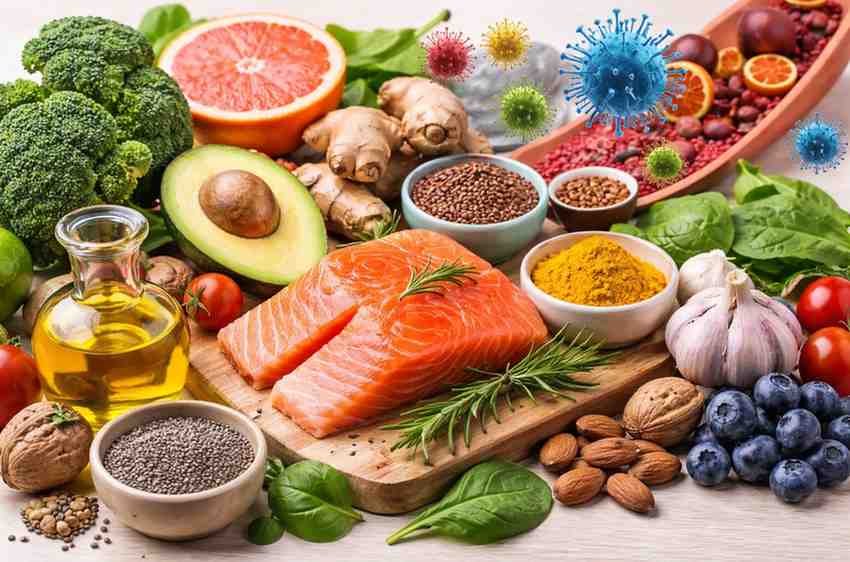
What a Genuinely Anti-Inflammatory Plate Looks Like
The science converges on a pattern that is neither restrictive nor complicated. It is, at its core, a return to foods the human body recognises and knows how to process — whole, minimally processed, diverse, and rich in the specific compounds that support immune regulation, gut integrity, and lipid health.
At every main meal, aim for: a substantial base of non-starchy vegetables — the more varied the colours, the broader the polyphenol and prebiotic fibre diversity. A quality protein source — oily fish (salmon, mackerel, sardines, anchovies) two to three times a week; legumes (lentils, chickpeas, black beans) several times a week; eggs; quality poultry or red meat in moderation. A source of healthy fat — extra virgin olive oil as your primary cooking fat, avocado, and a small handful of walnuts or almonds. A moderate portion of fibre-rich complex carbohydrate when warranted by activity level — sweet potato, oats, legumes, quinoa.
Daily: at least one serving of fermented food. A tablespoon of ground flaxseed (one of the richest plant sources of both soluble fibre and omega-3 alpha-linolenic acid). Two to three cups of green tea or herbal tea. A generous use of herbs and spices — turmeric, ginger, rosemary, oregano, cinnamon — all of which contain concentrated polyphenols and anti-inflammatory compounds.
Weekly: fatty fish at least twice. A diverse rotation of legumes. Dark leafy greens every day, if possible — they are among the most nutrient-dense, anti-inflammatory foods available and among the most reliably correlated with reduced inflammatory markers in population research.
What to minimise: seed oils (replace with extra virgin olive oil or avocado oil); ultra-processed foods; refined grains; added sugars; and alcohol.
This is not a deprivation diet. It is an abundance of foods that your immune system, your gut microbiome, and your cholesterol metabolism have been waiting for.
The Patterns That Tell You Your Diet Is Inflaming You
Even without blood tests, your body tells you when chronic inflammation is present. These are the signals worth paying attention to:
You wake up stiff, particularly in your joints, with a puffiness that doesn’t resolve until mid-morning. This is not normal ageing — it is the physiological signature of overnight inflammatory activity that couldn’t resolve properly.
You experience skin conditions — persistent acne, eczema, rosacea, psoriasis — that flare with certain foods and calm with others. Skin is one of the first visible signs of systemic inflammation, because inflammatory cytokines drive many of these conditions from the inside out.
You feel bloated or uncomfortable after most meals, not just heavy ones. This points to gut barrier dysfunction and dysbiosis — the two conditions most directly linked to the dietary triggers of systemic inflammation.
Your energy reliably crashes after meals — not just occasional tiredness, but a consistent post-meal fog or fatigue. This pattern often reflects the inflammatory response to blood sugar spikes and the cellular energy cost of an activated immune system.
Your cholesterol panel shows low HDL, elevated triglycerides, or an elevated hs-CRP — even if your total LDL looks unremarkable. This is the metabolic signature of dietary-driven inflammation and blood sugar dysregulation.
You feel unrested despite adequate sleep, experience a persistent low mood without clear cause, or find yourself catching every illness that circulates. Chronic systemic inflammation suppresses immune specificity — your immune system becomes simultaneously overactivated and less capable of targeted, effective responses.
None of these patterns are inevitable. They are reversible. And the most powerful point of intervention is the same for all of them: what you eat, how you eat it, and the internal environment your diet creates.
How Medhya AI Helps You Address Inflammation, Immunity, and Cholesterol Through Your Specific Diet
The challenge with translating anti-inflammatory dietary science into your actual life is that the optimal dietary pattern isn’t identical for everyone, or even for the same person at every stage of life.
Your inflammatory load depends on your gut microbiome composition, your hormonal status, your stress patterns, your sleep quality, your current metabolic state, and your individual food sensitivities. A broadly anti-inflammatory food — flaxseed, say, or fermented dairy — may not work for your body in your current state. A cholesterol-improvement strategy that focuses on soluble fibre may need to be combined with omega-3 support, blood sugar stabilisation, and gut repair before it produces meaningful results.
This is where personalisation matters more than generic protocols.
Medhya AI was built to understand your specific metabolic picture — not a population average — and build an anti-inflammatory nutrition plan calibrated to your biology.
Your Medhya Health Score analyses your energy, sleep, gut symptoms, dietary patterns, and metabolic markers to identify where inflammation is most likely showing up in your body and which dietary levers are most likely to produce meaningful change for you specifically. Not a generic list of anti-inflammatory foods. A prioritised, personalised plan based on your actual patterns.
Personalised meal plans built by Medhya target your specific gaps — whether that’s omega-3 sufficiency, polyphenol diversity, fermented food inclusion, fibre intake, or blood sugar stability — and translate them into real meals that fit your preferences and lifestyle. Because knowing what’s inflammatory and being able to cook it consistently, within your life, are two different things.
Blood sugar tracking and meal logging in Medhya helps you identify your personal glycaemic response patterns — the meals and foods that spike your blood sugar and drive the inflammatory cascade versus those that keep you stable and support lipid health. This data, over time, becomes a precise map of your own dietary inflammatory load.
Gut health support, including prebiotic-rich meal planning, fermented food integration, and anti-inflammatory eating patterns, is built into Medhya’s recommendations because the gut-immunity-cholesterol connection is central, not peripheral, to metabolic health.
Breathwork and nervous system regulation practices within the app address the cortisol-inflammation connection — because chronic psychological stress is as inflammatory as a poor diet, and the two compound each other in ways that dietary change alone cannot fully resolve.
Your inflammation isn’t random. Your cholesterol profile isn’t a genetic inevitability. Your immune system isn’t beyond influence. They are all, to a significant degree, the downstream consequence of the inputs you provide — and those inputs can change.
The Deeper Reframe
The conventional approach to high cholesterol — measure a single number, prescribe a medication, advise eating less fat — treats a complex, dynamic, diet-responsive system as if it were a static plumbing problem.
Your cholesterol doesn’t live in isolation. It circulates in a biological environment that is constantly being shaped by what you eat, how your gut is functioning, what your inflammatory status is, and how efficiently your liver and immune system are communicating. Change that environment — through the foods that reduce oxidative stress, rebuild gut integrity, resolve inflammation, stabilise blood sugar, and provide the structural raw materials for healthy lipoprotein function — and the numbers follow.
More importantly, the body follows.
The version of you with lower hs-CRP, a better HDL to triglyceride ratio, a gut microbiome producing abundant butyrate, and an immune system that is calibrated rather than chronically activated — that version feels profoundly different. Clearer. More resilient. Less reactive to every stressor, every bug, every demanding day. Less puffy, less foggy, less inflamed in ways that show up not just in blood tests but in the mirror, in your joints, in your mood.
That isn’t wishful thinking. It is the documented, peer-reviewed consequence of an anti-inflammatory dietary pattern maintained consistently over weeks and months.
And it begins, as almost every metabolic shift begins, with a single well-chosen meal.
Where to Start Tonight
You don’t need to overhaul everything at once. Start with two changes this week:
Replace your cooking oil with extra virgin olive oil, and add one tablespoon of ground flaxseed to your breakfast — over yoghurt, into oats, or blended into a smoothie. These two additions immediately begin shifting your omega-6 to omega-3 ratio, improving LDL oxidation resistance, and providing the soluble fibre that directly reduces LDL cholesterol through bile acid binding.
Add a fermented food daily — a small pot of live yoghurt, a tablespoon of sauerkraut alongside dinner, a glass of kefir. This single habit, sustained for two to four weeks, produces measurable shifts in microbiome diversity and a reduction in inflammatory proteins that research has documented in real clinical settings.
Then, get your Medhya Health Score — and understand exactly what your inflammatory load currently looks like, which cholesterol markers deserve your attention, and what your specific dietary pattern needs to address them most effectively.
Because you deserve more than a leaflet and a number.
You deserve to understand what’s actually happening — and to have a plan that works with your biology, not against it.
Medhya AI provides personalised meal plans, metabolic health tracking, blood sugar balance support, gut health optimisation, and anti-inflammatory nutrition planning to help you address the root causes of inflammation, immune dysfunction, and cholesterol dysregulation. Download the app and get your personalised Medhya Health Score today.
Leave a Reply