
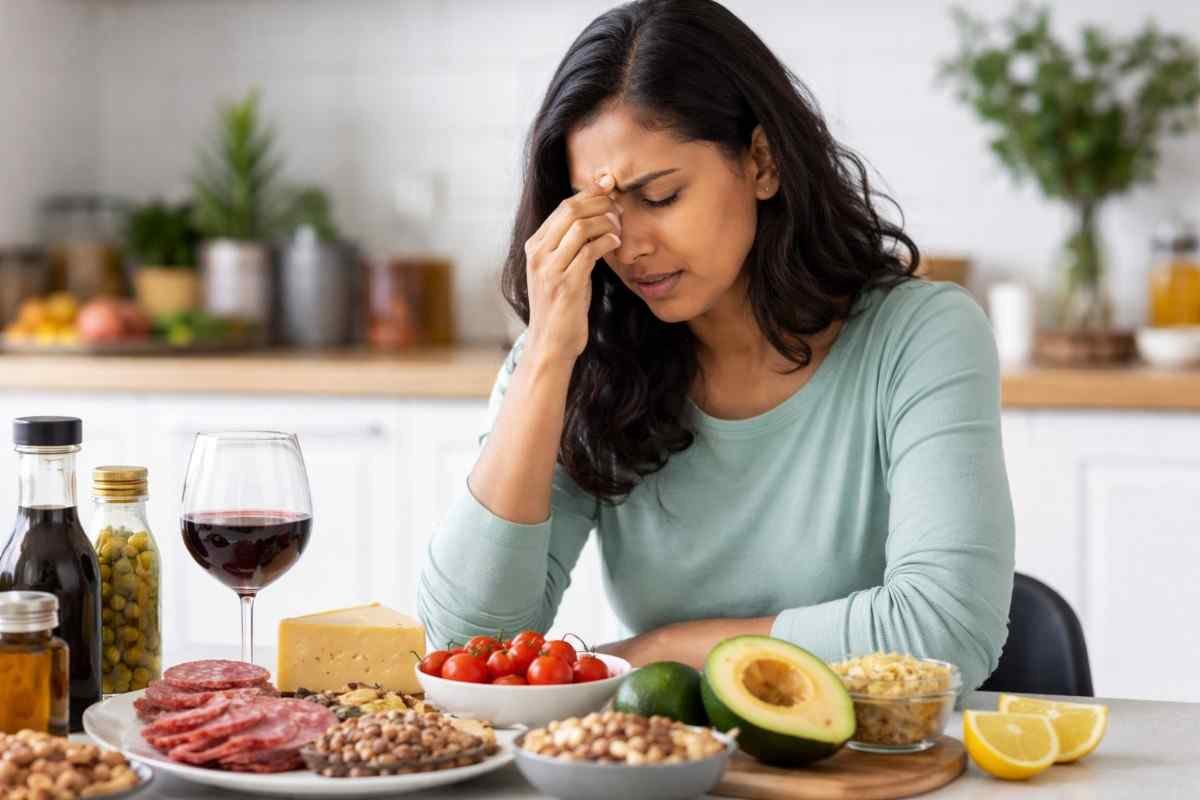
You eat a bowl of leftover salmon with spinach and avocado. Healthy dinner, right? Thirty minutes later, your face is flushing, your heart is racing, you have a pounding headache, and your skin feels like it’s crawling. You take an antihistamine, the symptoms subside, and you go to bed wondering if you’re developing allergies — or losing your mind.
The next morning you wake up with dark circles, a foggy head, and a stuffy nose. You didn’t drink alcohol. You didn’t eat anything unusual. You don’t have a cold. But you feel, unmistakably, unwell.
What most people in this situation don’t realise — and what most doctors don’t test for — is that the problem isn’t the salmon itself. It’s not even your immune system attacking a foreign substance, the way a true allergy works. The problem is a compound called histamine. And for a growing number of people, their body’s ability to process and clear histamine has become seriously compromised.
Histamine intolerance is one of the most underdiagnosed conditions in modern medicine. Its symptoms overlap with allergies, anxiety, irritable bowel syndrome, migraines, and hormonal imbalances, which is exactly why it gets missed, misdiagnosed, and mistreated for years. People go on antihistamines indefinitely, eliminate foods randomly, or are told their symptoms are stress-related.
But histamine intolerance is not mysterious. It has a clear biochemical mechanism. It has identifiable triggers. And it is, with the right approach, completely addressable.
Here is everything you need to understand — from what histamine actually is, to why your body is struggling to clear it, to the specific dietary and lifestyle changes that rebuild your tolerance from the ground up.
What Is Histamine — and Why Does Your Body Even Make It?
Histamine is a biogenic amine — a chemical compound synthesised by your body from an amino acid called histidine. It is produced by immune cells called mast cells and basophils, and it serves several essential biological functions. Understanding these functions is important because it dispels a pervasive myth: histamine is not a bad chemical that you want to eliminate. It is a vital signalling molecule. The goal is not to have none of it — it is to have the right amount, in the right places, at the right times.
Immune defence. Histamine is released by mast cells when the immune system detects a potential threat — an allergen, a pathogen, or damaged tissue. It triggers inflammation as a protective response, bringing blood flow and immune cells to the affected area.
Neurotransmission. Histamine functions as a neurotransmitter in the brain, playing a key role in the regulation of wakefulness, appetite, cognition, and memory. This is why antihistamines — which block histamine receptors in the brain — cause drowsiness.
Gut function. Histamine stimulates the secretion of gastric acid in the stomach, supporting digestion. It also regulates gut motility — the muscular contractions that move food through the digestive tract.
Hormonal signalling. Histamine interacts with oestrogen pathways. Oestrogen stimulates histamine release; histamine, in turn, stimulates oestrogen production. This bidirectional relationship is one reason why histamine symptoms often worsen at specific points in the menstrual cycle.
You also consume histamine directly through food. Many foods either contain histamine naturally — particularly fermented, aged, and preserved foods — or stimulate your body’s own mast cells to release histamine (these are called histamine liberators). Under normal circumstances, histamine from both sources is broken down and cleared efficiently by specific enzymes before it can accumulate to levels that cause symptoms.
The problem begins when either the histamine load exceeds the body’s enzyme capacity, or the enzymes themselves are not functioning adequately. The result is histamine accumulation in the bloodstream and tissues. And when histamine accumulates, every system it regulates begins to malfunction simultaneously.
Histamine intolerance is not an allergy. There is no immune response to a foreign substance. It is an imbalance between histamine load and the body’s enzymatic capacity to break it down.
The Two Enzymes That Keep Histamine in Check — and What Breaks Them
Your body relies primarily on two enzymes to metabolise and clear histamine: diamine oxidase (DAO) and histamine N-methyltransferase (HNMT). Understanding the distinction between them matters because different lifestyle factors affect each differently.
Diamine Oxidase (DAO): The First Line of Defence
DAO is the primary enzyme responsible for breaking down histamine in the gut — specifically, the histamine that arrives through food and drink. It is produced in the cells of the small intestinal lining and acts as a gatekeeping enzyme: before dietary histamine can be absorbed into the bloodstream, DAO should neutralise the majority of it.
DAO deficiency is the most common driver of histamine intolerance. When DAO is insufficient — whether in quantity or function — dietary histamine passes into circulation in amounts that overwhelm the body’s ability to manage it.
What impairs DAO:
Gut inflammation and intestinal permeability. DAO is produced in the gut lining. Any condition that damages the intestinal epithelium — coeliac disease, inflammatory bowel disease, small intestinal bacterial overgrowth (SIBO), chronic gut inflammation from food sensitivities — directly reduces DAO production. This is the single most important factor in DAO deficiency, and explains why histamine intolerance so frequently develops in people with gut issues.
Specific medications. A surprisingly long list of commonly prescribed drugs inhibit DAO activity, including certain antidepressants (particularly SSRIs and MAO inhibitors), NSAIDs, proton pump inhibitors (PPIs), metformin, and many antibiotics. Many people begin experiencing histamine intolerance symptoms shortly after starting a new medication — without connecting the two.
Alcohol. Alcohol both inhibits DAO activity and contains histamine itself — a double hit that explains why even small amounts of wine or beer can trigger disproportionate symptoms in histamine-intolerant individuals.
Nutrient deficiencies. DAO requires specific cofactors to function: vitamin B6, copper, vitamin C, and zinc are all essential. Deficiency in any of these nutrients impairs DAO enzymatic activity even when the enzyme is present in adequate amounts.
Oestrogen dominance. High oestrogen inhibits DAO and stimulates mast cell histamine release simultaneously — a combination that explains why histamine symptoms often peak in the second half of the menstrual cycle, during pregnancy, and at perimenopause.
HNMT: The Intracellular Backup System
HNMT operates inside cells rather than in the gut lumen, and is responsible for methylating and inactivating histamine within tissues — particularly in the brain, lungs, and liver. HNMT is genetically regulated, and polymorphisms in the HNMT gene can reduce its efficiency, creating a baseline predisposition to histamine sensitivity that is present from birth. If you’ve always reacted badly to wine, cheese, and fermented foods — even as a young adult with presumably healthy gut function — HNMT genetic variation may be a contributing factor.
The practical takeaway: histamine intolerance rarely has a single cause. It is almost always the intersection of multiple factors — a genetic predisposition, a dietary pattern high in histamine-rich foods, gut inflammation reducing DAO output, nutrient deficiencies impairing enzyme function, and a hormonal environment that tips the balance toward histamine excess. Addressing only one factor while ignoring the others produces partial improvement at best.
The Symptoms of Histamine Intolerance: Why It Looks Like Everything Else
Histamine receptors are distributed throughout the body — in the gut, skin, blood vessels, heart, brain, lungs, and reproductive system. When histamine accumulates systemically, it activates receptors across multiple organ systems simultaneously. This is why the symptom picture of histamine intolerance is so wide-ranging, and why it is routinely mistaken for other conditions.
Skin
- Flushing — sudden redness of the face, neck, and chest
- Hives (urticaria) — raised, itchy welts that may appear and disappear rapidly
- Generalised itching with or without visible rash
- Eczema flares or worsening of existing skin conditions
- Dark circles under the eyes — a classic sign of chronic histamine-driven inflammation
Head and Nervous System
- Headaches and migraines — histamine causes vasodilation of cerebral blood vessels
- Brain fog, difficulty concentrating, mental fatigue
- Anxiety and restlessness — histamine in excess activates alerting pathways in the brain
- Dizziness and vertigo
- Insomnia and disrupted sleep architecture
Cardiovascular
- Heart palpitations — histamine activates H2 receptors in the heart, increasing heart rate
- Low blood pressure and lightheadedness, particularly after meals
- Racing heart or irregular heartbeat, especially after high-histamine meals
Gastrointestinal
- Nausea and vomiting
- Abdominal cramping and bloating
- Diarrhoea — often within 30 minutes of eating high-histamine foods
- Constipation in some individuals
- Reflux and heartburn — paradoxically, DAO deficiency can reduce gastric acid levels, impairing digestion
Respiratory
- Nasal congestion and runny nose — ‘allergic’ symptoms without a clear allergen
- Sneezing, particularly after eating
- Worsening of asthma symptoms
- Throat tightening or sensation of swelling
Hormonal and Reproductive
- Symptoms that worsen in the second half of the menstrual cycle (luteal phase) and around ovulation
- Worsening of PMS symptoms
- Menstrual pain intensified by histamine-driven prostaglandin release
- Symptom flares during perimenopause as oestrogen fluctuates dramatically
The hallmark of histamine intolerance — unlike true food allergy — is that symptoms are dose-dependent and cumulative. A small amount of one high-histamine food may be tolerated. The same food in a larger portion, or combined with other histamine-containing foods, crosses a threshold and triggers a reaction. This bucket analogy is central to understanding and managing the condition.
The Histamine Bucket: Understanding Your Personal Threshold
One of the most useful conceptual frameworks for histamine intolerance is the “histamine bucket.” Imagine that your body has a finite capacity to process histamine at any given time — a bucket of a particular size. Everything that adds histamine to the bucket contributes to your total load: food, alcohol, stress hormones, oestrogen fluctuations, gut inflammation, pollen season, and exercise-induced mast cell activation.
When the bucket overflows — when total histamine load exceeds your enzymatic clearance capacity — symptoms appear. When the bucket is not full, the same foods that previously triggered reactions may be tolerated without issue.
This explains several puzzling features of histamine intolerance:
Inconsistent reactions. You can eat avocado on Monday with no problem, then react badly to the same amount on Thursday, because Thursday happened to be a high-stress day, you’d had wine the night before, and you’re in the pre-menstrual phase. Your bucket was nearly full before you sat down to eat.
Seasonal worsening. Pollen triggers mast cell histamine release. During high-pollen seasons, your baseline histamine load rises, meaning foods that were previously tolerated begin triggering reactions — because environmental histamine is already filling the bucket.
Worsening after illness or antibiotics. Illness disrupts gut microbiome balance, and antibiotics specifically devastate the beneficial bacteria that degrade histamine in the gut. Many people notice that histamine intolerance symptoms first appear or dramatically worsen following a course of antibiotics — a sign that their gut’s histamine-processing capacity has been compromised.
The bucket model is also fundamentally hopeful: it means that addressing the root causes of histamine intolerance — improving DAO enzyme function, reducing gut inflammation, managing stress, supporting microbiome health — increases the size of your bucket, raising your tolerance threshold so that a wider range of foods can be consumed without symptoms.
The Foods That Fill — and Empty — the Bucket
Dietary management of histamine intolerance is more nuanced than simply following a low-histamine list. Foods fall into several different categories, and understanding these distinctions makes the difference between a helpful dietary strategy and an overly restrictive approach that needlessly eliminates nutritious foods.
High-Histamine Foods (directly add histamine)
- Fermented and aged foods: aged cheeses, wine, beer, cider, kombucha, kefir, sauerkraut, kimchi, miso, soy sauce, vinegar, sourdough
- Preserved and cured meats: salami, pepperoni, prosciutto, smoked salmon, canned fish (tuna, sardines, anchovies), cured bacon
- Leftovers: histamine content increases rapidly as food sits — leftovers that have been refrigerated for more than 24 hours are significantly higher in histamine than freshly cooked food
- Alcohol: all forms, but red wine, champagne, and beer are particularly high
- Long-cooked or slow-cooked proteins: the longer meat cooks, the more histamine develops
Histamine Liberators (trigger your own mast cells to release histamine)
- Tomatoes and tomato products
- Spinach and aubergine (eggplant)
- Avocado
- Citrus fruits: oranges, lemons, grapefruit, limes
- Strawberries, raspberries, and pineapple
- Chocolate and cocoa
- Nuts, particularly walnuts and cashews
- Egg whites (yolks are generally well tolerated)
DAO Blockers (inhibit your own enzyme activity)
- Alcohol — one of the most potent DAO inhibitors
- Energy drinks and caffeine in large amounts
- Black, green, and mate tea
Low-Histamine Foods (generally well tolerated)
- Proteins: fresh (not leftover) chicken, turkey, beef, lamb, pork, freshly caught fish, egg yolks
- Vegetables: most freshly cooked vegetables except tomatoes, spinach, and aubergine — courgette, broccoli, sweet potato, carrot, cauliflower, green beans, asparagus
- Fruits: apple, pear, mango, melon, grapes, blueberries, cherries (in moderation)
- Grains: rice, oats, quinoa, corn, pasta (without tomato sauce)
- Fats: olive oil, coconut oil, butter
- Dairy: fresh milk, fresh cream, butter, ricotta, mozzarella (fresh, not aged)
The single most important practical rule: freshness is everything. Cook from fresh ingredients and eat as soon as possible after preparation. Avoid leftovers, meal-prepped proteins, and any food that has been stored for more than 24 hours.
The Root Causes You Must Address for Lasting Recovery
Dietary management alone — following a low-histamine list — will reduce symptoms. But it will not resolve histamine intolerance. The reason most people remain chronically histamine-sensitive for years, despite being careful with their diet, is that they are managing the symptom (excess histamine) without addressing the underlying causes of enzyme deficiency and excess histamine load.
Genuine recovery requires addressing the root causes simultaneously.
1. Heal the Gut Lining
Because DAO is produced in the cells of the small intestinal lining, gut healing is the single most impactful intervention for rebuilding DAO capacity. The priority is identifying and removing the primary drivers of gut inflammation — whether that’s undiagnosed coeliac disease, gluten sensitivity, chronic use of NSAIDs, parasitic infection, SIBO, or long-term dysbiosis from a poor diet and repeated antibiotic use.
Gut-supportive interventions with specific relevance to DAO production include glutamine supplementation (the primary fuel source for enterocytes — the cells that produce DAO), zinc (essential for intestinal barrier integrity), and consistent consumption of foods that support the gut microbiome without triggering histamine reactions — fresh vegetables and prebiotic fibres from leek, asparagus, and oats.
2. Rebalance the Gut Microbiome
Not all bacteria are equal when it comes to histamine. Certain bacterial strains actually produce histamine in the gut — including Lactobacillus casei, Lactobacillus bulgaricus, and Lactobacillus reuteri, strains commonly found in standard probiotic supplements and fermented foods. For histamine-intolerant individuals, these products can dramatically worsen symptoms.
Histamine-degrading bacteria — including Bifidobacterium infantis, Bifidobacterium longum, and Lactobacillus plantarum — support clearance of histamine in the gut. Supporting these strains through prebiotic foods and targeted probiotic supplementation can meaningfully improve histamine tolerance over time. This is one area where personalised guidance is particularly important — not all probiotics are histamine-safe.
3. Correct Nutrient Deficiencies
DAO enzyme function depends on specific cofactors. If these are deficient, supplementing DAO directly (as capsules taken with meals) will have a limited impact because the pathway remains compromised upstream. Prioritise:
- Vitamin B6 (P5P form): essential cofactor for DAO; deficiency is extremely common in people eating processed diets or taking oral contraceptives
- Copper: required for DAO catalytic activity; deficiency often co-occurs with high zinc supplementation, which depletes copper
- Vitamin C: supports DAO activity and independently accelerates histamine degradation; studies show that low vitamin C status directly impairs histamine clearance
- Zinc: critical for gut barrier integrity and DAO production; deficiency is common in those with chronic gut inflammation
4. Address Oestrogen Dominance
For women experiencing histamine intolerance that worsens cyclically — particularly in the luteal phase (days 14–28 of the menstrual cycle), during perimenopause, or while on oestrogen-containing contraceptives — addressing the oestrogen-histamine loop is essential.
Supporting oestrogen metabolism through the liver — via adequate intake of cruciferous vegetables, fibre, and B vitamins — and supporting progesterone production (progesterone is the oestrogen counterbalance and upregulates DAO activity) can significantly reduce hormonally driven histamine flares.
5. Manage Chronic Stress
Stress activates mast cells and triggers histamine release as part of the sympathetic stress response. People with high chronic stress loads often find that their histamine threshold is dramatically lower during stressful periods — foods they normally tolerate trigger reactions when the nervous system is activated. Consistent nervous system regulation — through breathwork, adequate sleep, and parasympathetic-activating practices — is not incidental to histamine recovery. It is mechanistically connected.
How to Test for Histamine Intolerance — and What the Tests Can (and Cannot) Tell You
Unlike true food allergies, histamine intolerance does not show up on standard allergy testing — IgE panels and skin prick tests simply don’t capture it. This is one reason it is so frequently missed by allergists and GPs.
The most useful investigative approaches:
DAO blood test. Measures serum DAO activity. Low DAO values (typically below 3 U/mL in most reference ranges) indicate impaired enzyme function and are consistent with histamine intolerance. However, a normal DAO result does not rule out histamine intolerance — HNMT dysfunction or high histamine load can produce symptoms even with adequate DAO.
Plasma histamine. Elevated fasting plasma histamine is suggestive of intolerance, though levels fluctuate significantly and must be interpreted alongside clinical symptoms.
HNMT genetic testing. Genetic panels available through functional medicine practitioners can identify polymorphisms in the HNMT gene that reduce intracellular histamine degradation.
Elimination and reintroduction protocol. Still considered the gold standard in clinical practice. A strict low-histamine diet for four weeks, followed by systematic reintroduction of higher-histamine foods with careful symptom tracking. If symptoms resolve during elimination and return predictably with reintroduction, histamine intolerance is confirmed clinically.
The Histamine Intolerance Recovery Plan: A Phased Approach
Recovery from histamine intolerance is not linear, and it is rarely achieved by dietary restriction alone. The most effective approach follows a phased structure that addresses the acute symptom burden first, then systematically rebuilds underlying enzyme capacity and gut health.
Phase 1 (Weeks 1–4): Load Reduction
Remove the primary sources of dietary histamine and DAO-blocking substances. Eat exclusively from the low-histamine food list. Cook from fresh ingredients and eat immediately. Remove alcohol entirely. Take a DAO enzyme supplement (available as capsules) with each main meal to support the clearance of dietary histamine while your gut lining heals. Track symptoms consistently to establish your baseline and begin identifying individual trigger patterns.
Phase 2 (Weeks 4–12): Root Cause Repair
With symptoms stabilised, shift focus to the underlying causes. Work with a practitioner to assess and address gut integrity — test for SIBO, investigate coeliac disease if not already done, support intestinal healing with targeted nutrients. Correctly identify nutrient deficiencies. If you are a woman experiencing cyclical flares, map your symptoms against your menstrual cycle and begin supporting oestrogen clearance and progesterone balance. Introduce histamine-degrading probiotic strains carefully and monitor response.
Phase 3 (Weeks 12 onwards): Systematic Reintroduction
As gut function improves and DAO capacity rebuilds, begin cautiously expanding the diet — not by eating large amounts of previously reactive foods, but by gradually testing small portions and observing response. The goal is not a permanently restrictive diet. It is a rebuilt system capable of processing a normal, varied diet without reaction. Most people who address the root causes report significantly expanded tolerance within 3 to 6 months.
The Myths That Keep People Stuck in Histamine Intolerance
“Fermented foods are healthy, so they must be fine for me.” For most people, fermented foods are genuinely health-supporting. For people with histamine intolerance — particularly those with compromised DAO function — these same foods are among the most potent triggers. The microbiome benefits of fermented foods are real. So is the histamine load. Standard fermented food recommendations do not apply until your capacity to clear histamine is rebuilt.
“Antihistamines solve the problem.” Antihistamines block histamine receptors and suppress symptoms. They do not improve DAO activity, heal the gut lining, or address the root cause of histamine accumulation. Long-term reliance on antihistamines for histamine intolerance is analogous to using a bucket to manage a slow leak — it reduces the immediate problem without fixing the pipe. Moreover, some antihistamines inhibit DAO activity, potentially worsening the underlying intolerance over time.
“If I have histamine intolerance, I’ll have it forever.” This is perhaps the most damaging myth. Histamine intolerance — in the majority of cases — is not a permanent condition. It is the consequence of a compromised system that, with the right inputs and enough time, can substantially recover. Many people who committed to the full root-cause approach report being able to eat a largely unrestricted diet within 6 to 12 months.
“My bloods are normal, so it can’t be histamine.” Standard blood panels do not test DAO activity, plasma histamine, or HNMT function. A full blood count, liver panel, and thyroid screen — the typical workup for unexplained fatigue and symptoms — will be entirely normal in someone with histamine intolerance. The absence of abnormalities on standard testing means only that the standard tests were run. It says nothing about histamine metabolism.
How Medhya AI Supports Your Histamine Recovery
Here is the challenge most people with histamine intolerance face: the condition is dynamic, personal, and context-dependent. Your histamine bucket fills from multiple sources simultaneously — diet, stress, hormones, sleep quality, gut health — and the threshold at which it overflows is different every day. Generic dietary lists are a starting point, not a solution.
What you need is a system that tracks your unique patterns, connects your daily inputs to your symptom experience, and gives you targeted guidance that accounts for where you are in your menstrual cycle, how your gut is functioning, what your stress load has been, and how your body is responding to the changes you’re making. That is exactly what Medhya AI was built to do.
Your Medhya Health Score gives you a personalised baseline: where your gut health, inflammation levels, hormonal patterns, and nutritional status currently sit — and which of these factors is most likely driving your histamine load. Instead of guessing which root cause to address first, you have a data-driven priority order.
Histamine-safe personalised meal planning. Medhya builds meal plans that are not just low in histamine, but calibrated to your specific nutrient gaps, your food preferences, and the phase of recovery you’re in — from Phase 1 elimination through to Phase 3 systematic reintroduction, all guided within the app and updated as your data changes.
Symptom and food tracking that reveals your personal triggers. Log your meals, mood, energy, gut symptoms, skin reactions, and headaches in Medhya. Over time, the app identifies the specific combinations and contexts that tip your bucket — not just “wine causes headaches” but “wine on a high-stress day, two days before your period, after a poor night of sleep, triggers a migraine.” Pattern recognition at a level that is simply impossible without data.
Gut health support is integrated into your plan. Because the gut is the primary site of DAO production, Medhya’s gut health protocols — microbiome support, intestinal barrier nutrition, anti-inflammatory meal planning — are directly relevant to histamine recovery. Your gut healing and your histamine recovery are the same programme.
Stress and nervous system regulation. The cortisol-mast cell-histamine connection is real and significant. Medhya’s guided breathwork practices — including the physiological sigh protocol and progressive parasympathetic activation — reduce the stress-driven component of your histamine load. For many people, consistent nervous system regulation produces a meaningful reduction in baseline symptoms within weeks.
Hormonal pattern mapping. For women whose histamine intolerance flares cyclically, Medhya tracks your symptoms against your menstrual cycle data, identifies the hormonal phase driving your worst reactions, and adjusts your dietary and lifestyle recommendations accordingly.
The Bigger Picture: Your Body Is Trying to Tell You Something
When histamine accumulates faster than your body can clear it, the symptoms are uncomfortable, disruptive, and often frightening. But they are also information. They are your body communicating, with biochemical precision, that something in its environment — dietary, microbial, hormonal, or psychological — has exceeded its capacity to manage.
The goal of histamine intolerance recovery is not to build a smaller and smaller life around an ever-shrinking list of safe foods. It is to understand what caused your tolerance to diminish, address those causes systematically, and rebuild a system that can handle the full richness of a varied, nourishing diet.
That recovery is available to you. It requires the right information, the right tools, and the right sequencing of interventions. But it does not require permanent deprivation.
Your body knows how to clear histamine. It did it every day for years before something — gut damage, nutrient depletion, chronic stress, hormonal imbalance — began to compromise that capacity. The goal is to give it back what it needs to do the job it was designed to do.
The body that doesn’t flush at dinner, doesn’t wake at 3 AM with a racing heart, doesn’t spend Monday exhausted from Saturday’s red wine — that body is not out of reach. It is your body, in better condition.
Ready to understand what’s driving your histamine reactions? Get your personalised Medhya Health Score — and discover which root causes are most relevant to your histamine load, your gut health, your hormonal patterns, and your nutritional gaps. Medhya builds a personalised recovery plan around your biology: histamine-safe meal planning, gut healing protocols, symptom tracking, breathwork, and hormonal cycle support — all in one place. Download Medhya AI today. Your histamine recovery starts with knowing where to begin.
Leave a Reply