
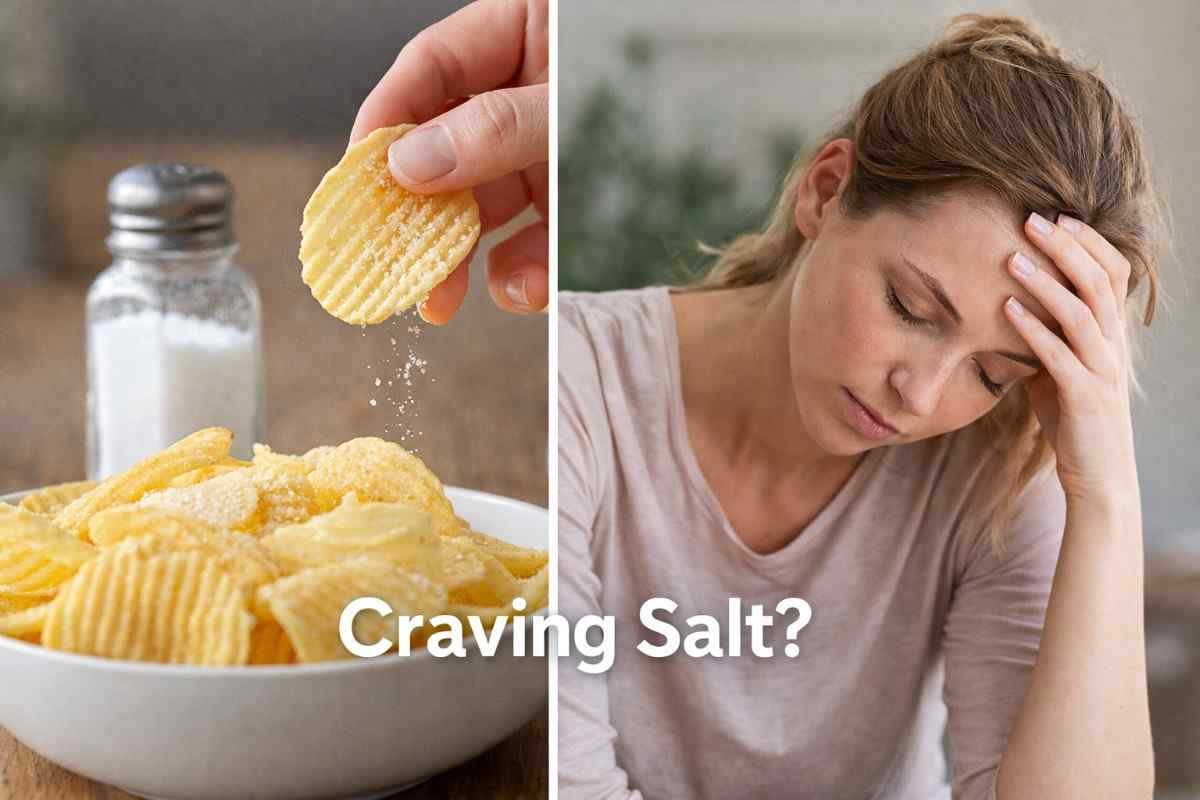
It hits you out of nowhere. That intense, almost desperate craving for something salty.
Chips. Pretzels. Salted nuts. Fries. Popcorn. Olives. Pickles.
You’re not even particularly hungry. But you NEED salt. Now.
So you eat it. The whole bag, maybe. And for a brief moment, you feel satisfied. Almost calm. Then comes the familiar voice: “Why do I always do this? What’s wrong with me?”
Here’s what I want you to know: Nothing is wrong with you.
That salt craving isn’t random. It’s not a lack of willpower. Your body is trying to tell you something specific: when you’re under chronic stress, your adrenal glands can’t produce enough aldosterone to help your kidneys retain sodium, leading your body to crave salt to replace what’s being lost.
What Happens When Your Body Is Under Sustained Pressure
When you’re under sustained pressure—whether from work deadlines, sleepless nights, worry, illness, or just the constant demands of life—your body activates its stress response system.
Your adrenal glands (sitting on top of your kidneys) release hormones to help you cope:
Cortisol gives you energy to handle whatever you’re facing—released by your adrenal glands to help you cope with stress and provide sustained energy.
Aldosterone tells your kidneys to hold onto sodium, which you need for nerve function, muscle contraction, blood pressure regulation, and essentially staying alive.
When the pressure is short-term, this system works beautifully: Stressor appears → Adrenals respond → Stressor passes → Everything returns to normal.
But when the pressure is ongoing—day after day, week after week—your adrenal glands become taxed to the point they are unable to keep up with the extra hormone production.
The Aldosterone-Sodium Connection
One of the first things that suffers when adrenals are overworked is aldosterone production. When your adrenal glands don’t produce enough aldosterone, your kidneys eliminate salt through the urine, leading you to crave more salt.
Here’s the cascade:
- Your aldosterone levels drop
- Your kidneys stop holding onto sodium as effectively
- You start losing sodium rapidly—literally urinating it out
- Meanwhile, your body NEEDS sodium to function
- Your body creates an urgent craving to get more sodium in
That’s the craving you feel. Urgent. Insistent. Almost desperate. Your body isn’t being difficult—it’s trying to survive.
Why Sodium Matters So Much
Research confirms that no cell in the human body can function without salt, and electrolytes like sodium, potassium, and chloride drive every intracellular process.
Sodium is essential for:
- Nerve function (every nerve signal requires sodium)
- Muscle contraction (including your heart)
- Blood pressure regulation
- Fluid balance
- Cellular communication
- Energy production
- Brain function
When your sodium drops, your body starts to panic: “We’re losing sodium! We need sodium to survive! GET SODIUM NOW!” That’s the craving you feel—not emotional, not psychological, but physiological.
Why This Craving Feels So Urgent
Have you noticed that stress-related salt cravings feel different from other cravings? They feel almost desperate. Urgent. Like you NEED it right now.
That’s because you kind of do. When your sodium levels drop too low, you can experience:
- Dizziness or lightheadedness
- Fatigue and weakness
- Brain fog and confusion
- Headaches
- Nausea
- Muscle cramps
- Heart palpitations
- Anxiety (yes, low sodium can cause anxiety!)
Your body knows it needs sodium to prevent these symptoms. So the craving isn’t gentle—it’s insistent. This is your body’s survival mechanism, not a lack of willpower.
The Pattern Most People Experience
Let me show you how this typically plays out:
Morning: You wake up already feeling behind. Your to-do list is overwhelming. You’re stressed before you even start. You grab coffee. Maybe skip breakfast or have something quick.
Mid-Morning: Work stress intensifies. Meetings, emails, demands. Your cortisol is rising. You’re running on caffeine and adrenaline.
Afternoon: The stress peaks. You’re exhausted but wired. Anxious but tired. Suddenly you need something salty. NOW. You raid the snack drawer—chips, crackers, pretzels—anything salty.
Evening: You’re still stressed. Maybe you have salty takeout for dinner. Or more snacks while watching TV.
Night: You might even wake up craving salt. Or wake up with your heart racing, feeling anxious.
This isn’t random snacking. This is a metabolic pattern driven by stress.
Why This Gets Worse Over Time
Here’s what makes this particularly frustrating—it’s a self-reinforcing cycle:
The more stressed you are → The more sodium you lose The more sodium you lose → The stronger your cravings The stronger your cravings → The more you eat salty processed foods The more processed foods you eat → The more inflammation, blood sugar chaos, and gut dysfunction Which makes you MORE stressed metabolically → And the cycle intensifies
Plus, there’s this: chronic stress affects your hormones including cortisol, leptin, ghrelin, and serotonin, making it harder to fight food cravings when you’re tired and stressed.
So you’re not just sodium deficient—you’re becoming generally mineral depleted. Which makes you feel worse. Which creates more stress on your body. Which depletes more minerals.
Why Eating Chips Doesn’t Actually Fix It
So you eat the chips. The pretzels. The salty snacks. And yes, you get some sodium. Your body says “thank you” temporarily.
But here’s the problem:
Problem 1: Processed Salty Foods Come With Baggage
You’re getting sodium, yes. But you’re also getting:
- Inflammatory seed oils
- Blood sugar-spiking refined carbs
- Artificial ingredients and preservatives
- A massive insulin spike (followed by a crash)
- More metabolic stress
So you’re meeting one need (sodium) while creating more problems (inflammation, blood sugar chaos).
Problem 2: You’re Not Addressing the Root Cause
The reason you’re losing sodium in the first place is chronic stress affecting your adrenal glands’ production of aldosterone, which regulates sodium balance.
Eating more salt doesn’t fix overworked adrenals. It’s like bailing water out of a boat without plugging the hole.
Problem 3: You’re Not Replenishing Other Depleted Minerals
Chronic stress depletes magnesium, potassium, B vitamins, vitamin C, zinc. Chips don’t provide any of those. So you’ve temporarily addressed sodium, but you’re still depleted in everything else.
Which is why you might feel better for 10 minutes, then feel tired, anxious, or foggy again.
What Your Body Actually Needs
If you’re craving salt when stressed, your body is giving you important information: “My stress response system is overworked. I’m depleting minerals. I need support.”
Here’s what actually helps:
1. Support Your Adrenals
Your adrenal glands need:
- Adequate nutrition: They can’t function on coffee and willpower. They need real food, regularly.
- Quality salt: Yes, your body needs salt! But get it from nourishing sources.
- Stress management: Your adrenals can’t heal while you’re chronically stressed. You need actual rest, not just “less stress.”
- Sleep: Adrenal recovery happens during deep sleep. 7-8 hours isn’t optional—it’s essential.
2. Get Salt from Nourishing Sources
You DO need salt when you’re stressed. But get it from foods that also provide minerals, not just sodium:
Mineral-rich whole foods:
- Bone broth (sodium + minerals + collagen)
- Sea vegetables like nori or dulse (sodium + iodine + trace minerals)
- Celery (natural sodium + potassium)
- Olives (sodium + healthy fats)
- Quality sea salt or Himalayan salt on your regular meals
Balanced salty meals:
- Soup with quality salt, vegetables, and protein
- Salted eggs with avocado
- Roasted vegetables with sea salt and olive oil
- Fish with seaweed
These give you sodium PLUS the other nutrients your stressed body needs.
3. Replenish Depleted Minerals
- Magnesium: Dark leafy greens, pumpkin seeds, dark chocolate, avocado (or supplement with magnesium glycinate)
- Potassium: Potatoes, bananas, leafy greens, avocados, squash
- B Vitamins: Eggs, meat, fish, leafy greens, nutritional yeast
- Vitamin C: Citrus, bell peppers, berries, leafy greens
You need ALL of these to support your stress response system—not just sodium.
4. Address the Stress Itself
This is the part nobody wants to hear, but it’s true: If you don’t address the chronic stress, your adrenals will keep struggling. And the cravings will keep coming.
This doesn’t mean your life needs to become stress-free (impossible). But it does mean you need:
- Daily stress management practices (even 10 minutes helps)
- Boundaries around what you take on
- Actual rest and recovery time (not just “less busy”)
- Support for your nervous system (breathing, movement, connection)
You can’t supplement your way out of chronic stress.
Two Different Responses to the Same Salt Craving
Let me show you the difference between ignoring the signal and understanding it:
Scenario 1: Ignoring the Signal
You’re stressed. Salt craving hits. You resist it because “chips are bad.” You try to white-knuckle through. The craving gets stronger. More insistent. Finally you cave and eat a huge bag of chips. Then feel guilty.
Your body got some sodium, but:
- You also got inflammation and blood sugar chaos
- You didn’t address depleted magnesium, potassium, etc.
- You didn’t support your adrenals
- The stress continues
- The craving will come back tomorrow
Scenario 2: Understanding the Signal
You’re stressed. Salt craving hits. You recognize: “My body is depleted from stress. I need minerals.”
You make yourself a bowl of bone broth with sea salt and vegetables. Or eggs with avocado and sea salt. Or a nourishing soup.
You give your body what it’s actually asking for:
- Quality sodium that satisfies the craving
- Other minerals that are also depleted
- Real food that nourishes rather than inflames
- A moment to pause and care for yourself
Your body feels supported. The craving resolves. You feel calmer, more stable.
See the difference? Not suppressing. Not indulging mindlessly. Responding intelligently to what your body is communicating.
How to Tell What You Really Need
Not all salt cravings are adrenal-related. Here’s how to distinguish:
It’s Probably Stress/Adrenal-Related If:
- The craving comes during or after stressful periods
- You also feel tired, wired, anxious, or overwhelmed
- You crave it even when not particularly hungry
- Salty food makes you feel temporarily calmer
- You’re also craving coffee or other stimulants
- You feel lightheaded or dizzy
- You’re urinating frequently
It Might Be Something Else If:
- You’re genuinely hungry and salty food sounds good (normal appetite)
- You’re craving salt on specific foods you love (preference, not urgency)
- You’ve been sweating a lot from exercise or heat (normal sodium loss)
- It’s around your period (hormonal sodium shifts – normal)
The key is the FEELING of the craving: Stress-related salt cravings feel urgent, almost desperate—like your body NEEDS it now. Normal salt preferences feel more mild—you’d enjoy it, but you’re not desperate for it.
The Science Behind Adrenal Fatigue and Salt Cravings
Research confirms the physiological basis for stress-related salt cravings. The adrenal glands secrete hormones including cortisol for stress management and aldosterone for balancing water and sodium ratios; when aldosterone becomes depleted in adrenal fatigue, it leads to sodium loss through the kidneys and bladder.
When you’re under chronic stress, your adrenal glands eventually become unable to secret sufficient hormones like cortisol and aldosterone, and when aldosterone levels drop, so too will sodium retention in your body.
This isn’t pseudoscience—it’s basic endocrinology. Your adrenal glands produce over 50 different hormones that help your body deal with stress, inflammation, and fluid balance. When these glands become overworked, the entire system becomes dysregulated.
Additional Factors That Worsen Salt Cravings
Sleep Deprivation
Lack of sleep affects multiple hormones: cortisol levels increase, leptin (which tells the brain to stop eating) decreases, ghrelin (which drives appetite) increases, and serotonin drops, making it harder to fight food cravings.
Intense Exercise
The more you exercise and sweat, the more sodium levels in your body reduce, causing your body to respond by upping your desire for salt. If you’re exercising intensely while under chronic stress, you’re creating a double sodium depletion.
Hormonal Changes
Research shows women experience hormone changes during PMS that lead to increased cravings for sweet or salty foods, especially around their periods.
When to Seek Medical Attention
While most salt cravings relate to stress and lifestyle factors, constant salt craving can be a symptom of Addison’s disease, a disorder where adrenal glands don’t make enough cortisol and aldosterone, causing salt loss from the body.
Other symptoms of Addison’s disease include:
- Muscle aches and weakness
- Severe tiredness and fatigue
- Nausea and stomach pain
- Unintentional weight loss
- Low blood pressure
- Darkening of the skin (hyperpigmentation)
If you experience salt cravings along with these symptoms, consult a healthcare professional.
How Medhya AI Helps You Decode Salt Cravings
You can’t calculate all the variables affecting your salt cravings in your head while standing in front of the snack cabinet. This is exactly what Medhya AI does.
When you’re stressed and craving salt, you check in: “I’m really stressed today and craving something salty.”
Medhya AI analyzes:
- Your sleep quality last night
- Your stress patterns this week
- Your recent food intake
- Your cycle phase (for women)
- Your energy levels
- Your other symptoms
Then provides specific guidance:
“Your body is showing signs of adrenal stress and mineral depletion. Here’s what will actually help right now:
- Have a bowl of bone broth with sea salt and vegetables, OR make eggs with avocado, sprinkled with sea salt
- Include magnesium-rich foods today: dark leafy greens, pumpkin seeds
- Take a 10-minute break to do some deep breathing
- Aim for 8+ hours of sleep tonight
- Skip intense exercise today—do gentle movement instead
- Consider magnesium glycinate before bed
- Avoid chips and processed snacks—they’ll spike your blood sugar and create more stress on your body”
This isn’t generic advice. This is based on YOUR current state, YOUR patterns, YOUR body’s specific needs today.
The Bigger Picture
Your salt cravings when stressed aren’t a character flaw. They’re not emotional eating. They’re not lack of discipline.
They’re your body trying to survive chronic stress. Your adrenal glands are working overtime. You’re depleting sodium and other minerals. Your body is asking for help.
The craving is intelligent. The usual response (chips and guilt) isn’t.
What you need is:
- To understand what your body is actually asking for
- To respond with nourishment, not just salt
- To address the chronic stress depleting you
- To support your adrenals with what they actually need
And you need this guidance in real-time, based on YOUR current state—not generic advice. That’s exactly what Medhya AI provides.
Not judgment. Not restriction. Just intelligent translation of what your body is saying—and specific guidance on how to respond.
Understanding that your salt craving is information changes everything. No more guilt. No more confusion. Just clear understanding and supportive action.
Frequently Asked Questions
Q: Is it bad to give in to salt cravings? No—your body genuinely needs sodium when stressed and depleting it rapidly. The question is HOW you give your body salt. Choose nourishing sources like bone broth, quality sea salt on whole foods, and mineral-rich options rather than processed chips that create additional metabolic stress.
Q: How much salt should I consume if I have adrenal fatigue? A helpful test: try a quarter teaspoon of salt in 8 ounces of water; if the water tastes better (not salty, but more satisfying), it signals your body needs the salt. Add salt until water tastes salty, then back off by 1/4 teaspoon—use this as a homemade electrolyte drink. However, if you have high blood pressure or other conditions, consult a healthcare provider first.
Q: Can adrenal fatigue cause other cravings besides salt? Yes. Chronic stress and adrenal dysfunction often lead to cravings for sugar, caffeine, and simple carbohydrates as your body desperately seeks quick energy. These cravings typically intensify during afternoon energy crashes when cortisol naturally dips.
Q: How long does it take to restore adrenal function? Adrenal recovery varies based on the severity and duration of stress, but most people notice improvements in 4-12 weeks with proper support including adequate rest, stress management, nutritional support, and mineral replenishment. Full recovery can take 6-24 months.
Q: What’s the difference between Addison’s disease and adrenal fatigue? Addison’s disease is a serious medical condition requiring hormone replacement therapy where adrenal glands produce insufficient cortisol and aldosterone. Adrenal fatigue (more accurately called HPA axis dysfunction) refers to suboptimal adrenal function from chronic stress—less severe but still impactful on daily functioning.
Q: Can you have too much salt? Yes. The American Heart Association recommends no more than 2,300mg of sodium daily. However, people with adrenal stress and low blood pressure often need more sodium than this guideline suggests. Work with a healthcare provider to determine appropriate sodium intake for your specific situation.
Leave a Reply